Deck Skirting Ideas That Look Good and Let the Deck Breathe
The best deck skirting ideas hide the space under a deck while still letting air move through it: horizontal or vertical slats with gaps, composite skirting that matches the deck, or lattice backed with wire mesh. In humid Georgia, sealing the underside tight traps moisture against the framing, so good skirting is always part screen, part vent.
- Deck skirting should screen the view, not seal the space. Leave gaps so air can dry the framing.
- Horizontal slats, vertical boards, composite panels and metal panels are the most popular lattice alternatives.
- To keep animals out, back the skirting with galvanized hardware cloth bent outward or buried at the bottom.
- Grade the soil away from the house and keep skirting boards off the dirt so water can drain.
- Include an access door or removable panel so you can inspect footings, ledger and plumbing.
What deck skirting is for
Deck skirting is the screen that closes the gap between the bottom of a deck and the ground. On a low deck it hides posts, bare dirt and the inevitable pile of stored stuff. On a taller deck it can turn the space underneath into storage or a cleaner backdrop for landscaping.
It does three useful things: improves the look, keeps out animals and windblown leaves, and hides clutter. It also has one way to go wrong: if it closes the space up completely, the area under the deck turns into a damp, still pocket. In the North Atlanta climate, with long humid summers and heavy red clay that holds water, that is a recipe for rot, mold and termites in the framing you can’t see.
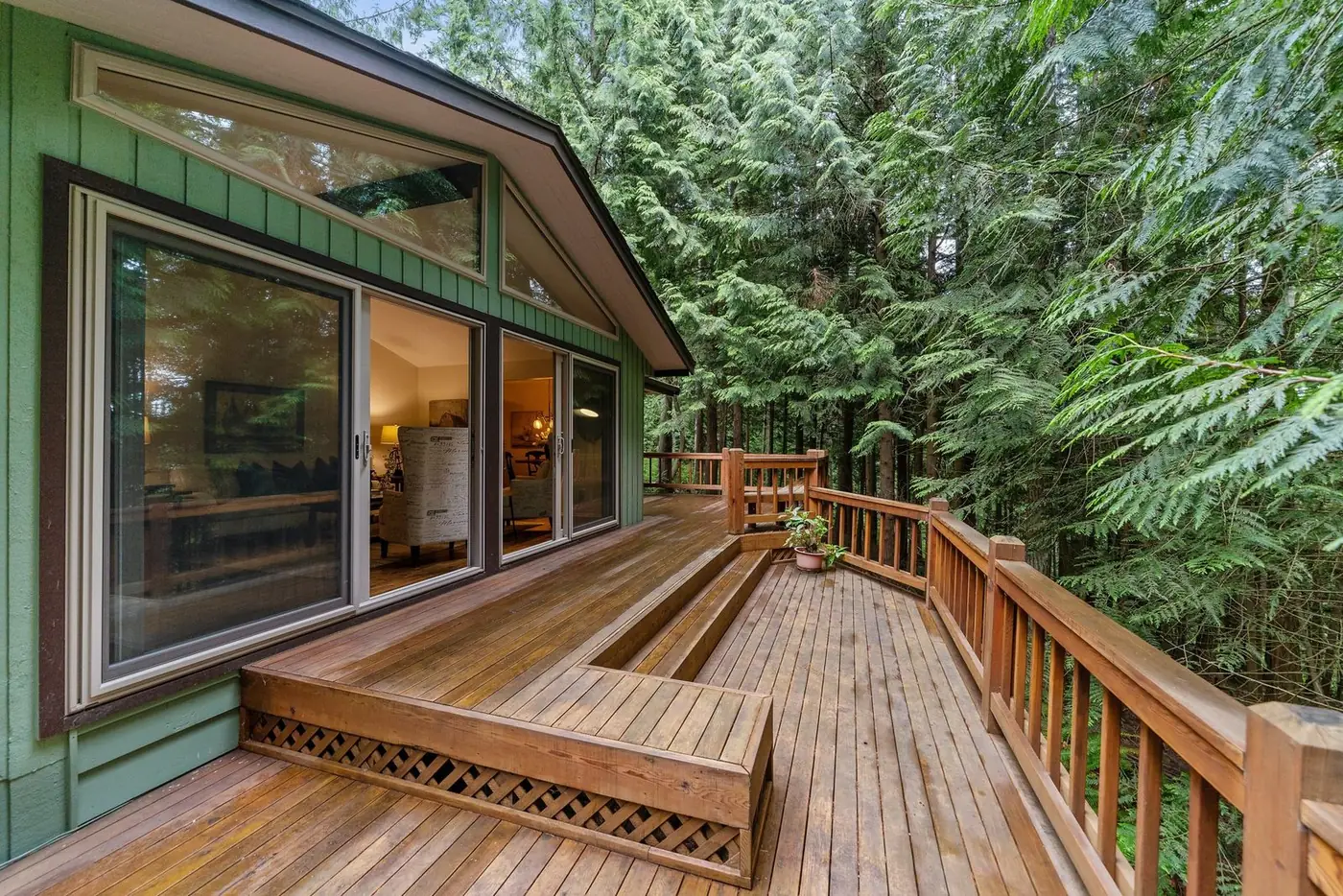
The photo above shows classic diagonal lattice used to close in the side of a raised platform on a wood deck. It is the look most people picture when they think of deck skirting, and also the one most people want to move beyond.
Ten deck skirting ideas
1. Lattice, done better
Lattice is cheap and breathes well. Its weak points are flimsy panels that crack, sag and pop off their nailers. Heavier wood lattice set in a proper frame, or square-pattern lattice instead of diagonal, looks more current and lasts longer. Vinyl lattice won’t rot but can look plasticky and becomes brittle over time in strong sun.
2. Horizontal slat deck skirting
Horizontal boards with small, even gaps are the most popular lattice alternative right now. They suit modern and farmhouse homes, line up neatly with horizontal railings, and leave plenty of airflow. Use a spacer to keep gaps consistent, and add a mid-span support so long boards don’t sag.
3. Vertical boards with gaps
Vertical boards, or a board-and-gap pattern, echo traditional picket railings and shed water well because rain runs straight down them. They are an easy match for a wood deck painted or stained in the same color.
4. Composite deck skirting
Composite deck skirting uses the same boards or fascia as a composite deck, so the whole structure reads as one piece. It doesn’t rot or need staining, but it is heavier and more flexible than wood, so it needs more framing behind it. Check the manufacturer’s guidance for spacing and gaps, since composite expands and contracts with temperature.
5. Metal panels
Perforated or corrugated metal panels in a wood frame give an industrial or modern look, and perforated panels breathe well. Choose a coated or galvanized finish and keep cut edges off the soil.
6. Stone or masonry with vents
A stone veneer, brick or faux-stone panel base looks substantial and fits many North Fulton homes with stone accents. It is also the easiest to over-seal. Build in generous vents or open sections so air can move.
7. Slats backed with hardware cloth
Any open skirting can be backed with galvanized wire mesh. You get the airflow of the slats with a barrier animals can’t squeeze through. More on that below.
8. Living skirting
Shrubs, ornamental grasses or ferns planted a couple of feet out from a low deck can hide the underside on their own. Leave a gap so air moves and so plants don’t hold moisture against the framing.
9. Deck skirting with access door
A hinged or removable panel turns the underside into usable storage and gives you a way in to inspect. It works with every style above.
10. Under-deck storage room
On a tall deck, framed skirting with a door and a gravel floor can create a garden shed under the deck. If you want the space to stay dry, that is a different project, covered in our guide to under-deck drainage and ceilings and our guide to a screened porch under a deck.
Ventilation: don’t seal it tight
The framing of most decks is pressure-treated lumber. Treatment slows rot, but wood that stays wet for months still breaks down, fasteners corrode faster, and mold grows on the underside of the boards. On composite decks, the boards may outlast a frame that never dries.
Georgia makes this worse. Summer humidity, frequent thunderstorms, morning dew and shade from tree canopy all mean the space under a deck can stay damp for long stretches. A deck with solid skirting on all sides holds that moisture right against the joists.
How much airflow is enough?
There isn’t a single code number for ventilation under an open deck, so builders use judgment. Some practical rules:
- Leave consistent gaps between slats or boards, all the way around.
- On solid styles (stone, closed panels), add vent openings on at least two opposite sides for cross-flow.
- Leave a small gap between the bottom of the skirting and the soil, or use ground-contact-rated material at the bottom.
- Don’t pile leaves, firewood or stored items against the inside of the skirting where they block air and hold water.
Very low decks, only a few inches off the ground, have little airflow to begin with. On those, open or no skirting is often the better choice.
Critter-proofing deck skirting
The space under a deck is ideal shelter for animals. Around Roswell and Alpharetta, the usual guests include opossums, raccoons, skunks, rats, snakes and, increasingly in Georgia, armadillos, which are strong diggers.
The hardware cloth method
- Attach galvanized hardware cloth (½-inch mesh is common; ¼-inch keeps out smaller pests) to the back of the skirting frame.
- At the bottom, dig a trench and bury the mesh, or bend it outward into an “L” about 12 inches along the ground and pin it down. Animals that dig at the base hit the mesh and give up.
- Cover the buried or bent mesh with soil, mulch or gravel.
Before you close it in
Make sure nothing is living under the deck before you finish the last panel. A one-way exclusion door, or a few days of watching, avoids trapping an animal inside. If you’re unsure, a wildlife control service can help.
Drainage under the deck
Skirting changes how water moves around a deck, so drainage needs a plan.
- Grade away from the house. The ground under the deck should slope away from the foundation so water doesn’t pool against it.
- Consider gravel. Landscape fabric topped with gravel under the deck cuts weeds and keeps mud from splashing up onto the framing. On red clay, which drains slowly, gravel also helps the surface dry out.
- Watch the downspouts. A downspout emptying under the deck can turn the area into a swamp. Extend it out past the skirting or tie it into a drain line.
- Keep the skirting off the dirt. Boards sitting in soil wick water and rot first. A small gap, or a ground-contact-rated bottom board, prevents this.
- Leave the footings visible. You should be able to see whether soil is washing away around posts after storms.
Deck skirting with an access door
Every skirted deck should have at least one way in. You’ll need it to check posts and footings, look at the ledger and its flashing, reach outdoor plumbing or electrical, and retrieve the ball the dog chased under there.
Access door options
- Hinged door: built from the same slats as the skirting with heavy-duty exterior hinges and a latch, so it practically disappears.
- Removable panel: held with turn buttons, magnetic catches or screws. Good where you only need occasional access.
- Double doors: for a tall deck used as storage for mowers or bikes.
Frame the door opening with its own posts or blocking so it doesn’t sag, and back it with the same mesh as the rest of the skirting.
Cost and planning
Skirting cost depends mostly on the material and the height of the deck (the taller it is, the more square footage of skirting). As a rough order, from least to most expensive:
- Lattice panels
- Pressure-treated wood slats or vertical boards
- Cedar slats and metal panels
- Composite deck skirting matching the deck
- Stone or masonry
Mesh backing, access doors and gravel add to each. Skirting is easiest and cheapest to build at the same time as the deck, because nailers and posts can be placed with it in mind. To see where skirting fits into a full project budget, run your numbers through our deck cost calculator.
HOA and permits
Many North Atlanta HOAs specify skirting materials or colors, and some require it on decks visible from the street. Skirting usually doesn’t need its own permit, but enclosing a deck’s underside as a room is a different matter. If you’re building new, include it in the plans you submit; see deck permits in North Fulton.
Building from scratch? Our custom deck and composite deck pages show how skirting, fascia and railings can be designed together.
Deck skirting FAQ
What can I use instead of lattice for deck skirting?
Horizontal slats, vertical boards with gaps, composite boards that match the deck, perforated metal panels, stone with vents, or plantings. Back any of them with galvanized hardware cloth if you want to keep animals out.
Should deck skirting be vented?
Yes. Air needs to move under the deck so the framing dries out, especially in humid climates like Georgia. Use gapped boards or add vents on opposite sides of solid skirting, and keep the bottom off the soil.
How do I keep animals from getting under my deck?
Attach galvanized hardware cloth behind the skirting and bury it, or bend it outward in an L shape about 12 inches along the ground, so digging animals hit the mesh. Make sure nothing is already living under the deck before you close it in.
Does deck skirting cause rot?
Skirting that seals the underside tight can, by trapping moisture against the framing. Open, ventilated skirting with good drainage underneath doesn’t. Skirting boards sitting in the soil will rot themselves, so keep a gap or use ground-contact material.
Is composite deck skirting worth it?
On a composite deck, often yes: it matches the boards and fascia and never needs stain. It costs more than wood and needs closer framing behind it, so it makes the most sense when it’s planned with the deck.
Related
- Services: custom decks, composite decks, deck repair and maintenance
- Tools: deck cost calculator, deck board calculator
- Guides: under-deck drainage and ceilings, multi-level deck ideas, composite vs PVC decking
- Areas we serve: Roswell, Alpharetta, Johns Creek and every North Fulton service area
Stop staring at that tired old deck. Let’s draw something better.
Free in-home consultation. Honest material guidance. A clear, fixed-price quote you can take to the bank — usually within 48 hours of our visit.
Mon–Fri 7a–6p · Sat 8a–4p · Real local crews · No call centers