Deck Staining & Sealing in Roswell & North Atlanta
A good stain job is mostly prep. Rolling color over a grey, mildewed deck looks good for one summer and then peels or blotches. We clean the wood properly, strip what needs stripping, brighten it, let it dry, and then put down a finish that suits the wood, the sun exposure and how much upkeep you’re willing to do.
Wash, strip, brighten: the prep that makes stain last.
Every deck gets a look before we price it. Splash some water on the boards: if it beads, there’s still finish on the wood and new stain won’t soak in. If it darkens and absorbs, the wood is ready to clean and coat.
Clean
We use a wood cleaner to lift mildew, algae and ground-in dirt, then rinse at low pressure with a wide fan tip. High pressure close to the wood is what causes the fuzzy, furrowed boards you see on a lot of decks. Shady decks under oaks and poplars usually have a green film that needs a second pass.
Strip
If there’s old film-forming stain or sealer peeling off, it has to come off before a penetrating stain goes on. That’s a chemical stripper and scrubbing, sometimes followed by light sanding on handrails. Peeling solid stain is the hardest case; often the realistic answer is to go back over it with solid.
Brighten
Cleaners and strippers leave wood dark and blotchy. An oxalic-acid brightener resets the pH and pulls the color back toward fresh wood so the stain reads evenly.
Dry, then repair
The deck has to dry out before stain goes on, often two dry days in our humidity. While it dries we replace split boards, set popped nails or swap them for screws, and point out any soft framing. If we find real structural problems, we’ll tell you before we put a nice finish on top of them. That’s a repair conversation first.
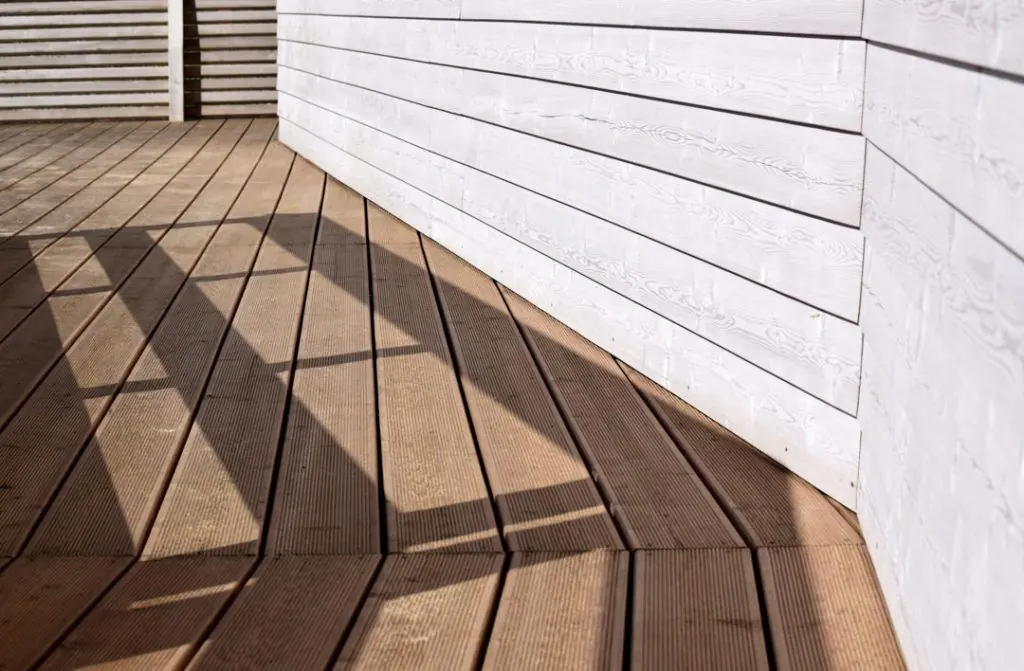
Transparent, semi-transparent or solid.
More pigment means more UV protection and longer between coats, and less of the wood grain showing. Here’s how each holds up in Georgia sun and humidity.
Clear & transparent
Shows the most grain. Very little pigment means very little UV protection, so in full Georgia sun plan on recoating roughly every year. Best on newer wood in good shape, or on shaded decks where you want a natural look.
Semi-transparent
The sweet spot for most pine and cedar decks. Enough pigment to slow graying while the grain still shows. In North Atlanta, expect to wash and re-coat about every 2 years, sooner on west- and south-facing decks in full sun.
Solid
Opaque, like a thin paint that soaks in. It hides mismatched and weathered boards and lasts longer, roughly 3–4 years between coats here, but once you go solid it’s hard to go back to a see-through finish.
Deck cleaning & restoration
Not every deck needs fresh stain this year, but almost every deck in North Atlanta needs a proper deck cleaning at least once a year. Pollen, oak tassels, leaf tannins and mildew settle into the grain, hold moisture against the wood and make even a newer deck look tired. A good clean also tells you whether the existing finish still has life in it.
Cleaning a deck between stain coats
For a deck whose finish is still in fair shape, a cleaning visit is a wood-safe cleaner worked into the boards, railings and stairs, a low-pressure rinse, and clearing the gaps between boards so water can drain. Shady decks get a mildewcide pass. It takes the green film and gray haze off without stripping the stain, and often buys another season before re-coating.
Deck restoration for weathered wood
Deck restoration is for wood that has gone gray, furry or blotchy, or where old finish is peeling in patches. It combines the full prep sequence above (clean, strip, brighten) with light sanding where boards have raised grain, replacing the worst boards, re-setting popped fasteners, and then a new stain and seal. A deck refinishing job like this costs more than a routine re-coat, but it can bring back wood that looks past saving. If the framing underneath is soft, restoration starts with deck repair instead.
Deck sealing: what a sealer does and doesn’t do
A clear deck sealer slows water absorption, which reduces cracking, cupping and mildew, but with little or no pigment it offers little UV protection, so wood still grays in the sun. In practice most homeowners are better served by a penetrating stain that seals and shades at the same time. Sealing alone makes sense on shaded decks, or on cedar where you want the natural color for a season and accept recoating often.
Composite decks need cleaning, not sealing. Use the cleaner the board maker approves and avoid pressure washers set too close to the surface.
Deck stain vs. paint
We get asked this constantly, and on walking surfaces our answer is almost always stain. Paint forms a film on top of the wood. On a horizontal board that bakes in the sun, collects water and gets walked on, that film cracks, moisture gets underneath, and it peels in sheets. Fixing peeling paint on a deck means scraping or stripping every board.
A stain soaks into the wood instead of sitting on it. When it wears, it wears down evenly and you clean and re-coat; no scraping. A solid stain gives you most of the look of paint with far less peeling. Paint (or solid stain) can make sense on vertical parts that don’t get foot traffic: skirting, fascia, and the posts and balusters of a railing if you want them to match the house trim. Deck coatings that promise to resurface a worn-out deck in one thick coat are a gamble in our climate; when they fail, they’re miserable to remove.
When to stain a deck in Georgia
Timing matters as much as product. Our rough calendar around Roswell and Alpharetta:
- Skip pollen season. From roughly mid-March into April, yellow pine pollen coats everything. Stain applied then traps a gritty yellow film. We wait for the heavy pollen to wash off.
- Late April through June is a good window: warm, often drier, pollen is done.
- Mid-summer works if we pick our days. We avoid hot boards in direct afternoon sun, which flash-dry the stain and leave lap marks, and we watch for pop-up thunderstorms.
- September and October are often the best weeks of the year for staining: lower humidity, mild temperatures. Leaf drop under heavy canopy can be a nuisance late in the fall.
Whatever the month, we need dry wood going in, no rain for a day or so after the final coat, and temperatures inside the product’s label range. New pressure-treated lumber needs to dry out before its first coat; the water-drop test tells us when it’s ready.
Composite and PVC decks don’t need stain. They need a periodic cleaning to deal with mildew and pollen; see our composite decks page for how they compare over time.
What deck staining costs
Typical North Atlanta pricing for 2026 is roughly $2–5 per sq ft of deck surface, including wash and prep. Railings, stairs, lattice and skirting are priced on top, because a run of balusters takes longer to coat by hand than the whole floor. The low end is a clean deck that just needs a wash and a fresh semi-transparent coat; the high end is a deck with peeling film to strip, heavy mildew, or lots of board repairs first. These are ranges, not a quote.
For a 300 sq ft deck, that’s roughly $600–1,500 for the floor before rails and stairs. To figure out how much stain a DIY job needs, use our deck stain calculator. If the boards are too far gone to take a finish evenly, a replacement or a re-deck may cost less over ten years than repeated stripping; the repair-or-replace tool helps you weigh it.
We stain and seal decks in Roswell, Alpharetta, Johns Creek, Dunwoody and north Atlanta, and we match stain colors to your house and any HOA color requirements.
Related guides: deck stain colors and semi-transparent vs solid · the best wood for a deck in Georgia · composite vs PVC decking if you are done staining · deck cleaning and pressure washing · best deck stain for Georgia · deck stain vs paint
Common questions about staining a deck.
How often should I stain my deck in Georgia?
Roughly every 2 years for semi-transparent stain and every 3–4 years for solid stain. Clear and transparent finishes may need a yearly coat in full sun. Shaded decks last longer between coats but need more frequent cleaning for mildew.
Is it better to stain or paint a deck?
For deck boards, stain. Paint forms a film that cracks and peels on horizontal surfaces, and fixing it means scraping. Penetrating stain wears evenly and is easy to re-coat. Paint can work on skirting, fascia or railings that don’t get walked on.
How much does it cost to have a deck stained?
In North Atlanta, typically about $2–5 per square foot including washing and prep, with railings and stairs priced separately. Stripping old peeling finish or replacing boards pushes it toward the top of the range.
When is the best time of year to stain a deck around Atlanta?
After pollen season ends in late April through early summer, and again in September and October. Avoid the heavy-pollen weeks of spring, very hot boards in direct afternoon sun, and any day with rain in the forecast.
How long should new pressure-treated wood dry before staining?
It depends on how wet the lumber was and the weather, so test rather than count days. Sprinkle water on the boards: if it soaks in within a few minutes, the wood is ready. If it beads up, give it more time.
Stop staring at that tired old deck. Let’s draw something better.
Free in-home consultation. Honest material guidance. A clear, fixed-price quote you can take to the bank — usually within 48 hours of our visit.
Mon–Fri 7a–6p · Sat 8a–4p · Real local crews · No call centers