Deck Cleaning & Pressure Washing in Roswell & North Atlanta
Pressure washing a deck the wrong way is one of the fastest ways to age it. Too much pressure too close tears up the soft grain of pine and cedar, leaving fuzzy, furrowed boards that soak up water and look worse than before. Our deck cleaning leans on the right cleaner and a low-pressure rinse instead, so the pollen, mildew and grime come off and the wood stays intact.
Soft wash vs pressure washing a deck
“Pressure washing” is what most people search for, and a washer is part of how we clean, but pressure isn’t what does the cleaning. The chemistry does.
Soft wash: cleaner first, gentle rinse
A deck soft wash means applying a wood-safe cleaner, letting it dwell long enough to loosen mildew, algae and dirt, working it into the grain with a brush where needed, then rinsing at low pressure. It’s our default for wood decks, railings and stairs.
Where higher pressure goes wrong
Softwoods have soft earlywood between harder growth rings. A narrow, high-pressure tip held close cuts the soft part away faster than the hard part. The result is raised, “furred” fibers, lap marks and wand streaks that show through any stain. Fixing it means sanding. When we do use a pressure washer, it’s at low pressure with a wide fan tip, held back from the boards and moved with the grain.
If the deck needs a new finish after cleaning, see our deck staining and sealing service.
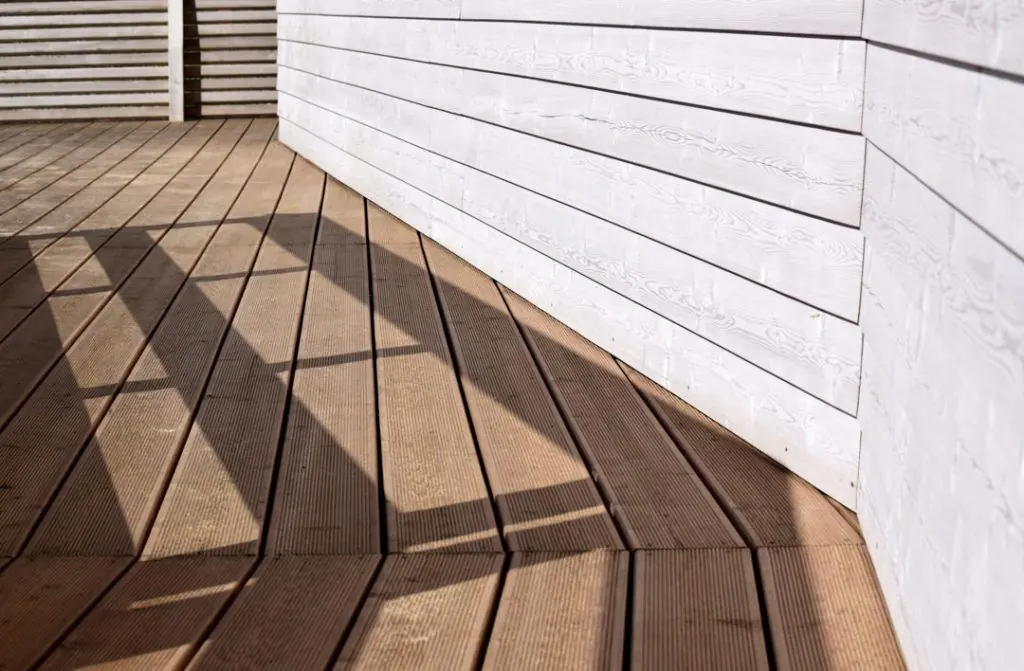
Clean, brighten, rinse, dry.
A typical deck wash takes part of a day. Heavy mildew, old peeling finish or a lot of stairs and railing add time.
Prep & protect
Furniture off, gaps between boards cleared of leaves and pine needles, and nearby plants wetted down and covered so runoff doesn’t burn them.
Clean
An oxygen-based cleaner (sodium percarbonate) for most decks, with a stronger mildew treatment on shady, green boards. Left to dwell, then scrubbed where it needs it.
Brighten
Cleaners leave wood dark and slightly alkaline. An oxalic-acid brightener neutralizes that, lifts tannin and rust stains and brings back an even color.
Rinse & dry
A thorough low-pressure rinse, plants rinsed again, and the deck left to dry. We point out any soft boards, popped nails or loose rails we notice along the way.
Deck cleaners and brighteners: what works and what to avoid
Most of the deck cleaning products on the shelf fall into a few groups. Knowing the difference saves a lot of damaged wood.
- Oxygen bleach cleaners (sodium percarbonate) are our go-to for wood. They lift dirt, gray weathered fibers and mildew staining without being harsh on the wood or most plants when rinsed well.
- Chlorine bleach will whiten mildew stains quickly, but it doesn’t remove dirt well, can weaken wood fibers, corrodes metal fasteners and is hard on plants. We don’t use it as a general deck cleaner.
- Strippers are for removing old stain and sealer, not for routine cleaning. They’re a step in refinishing, not a wash.
- Brighteners (usually oxalic acid) go on after a cleaner or stripper to restore the wood’s color and help a new finish soak in evenly.
Cleaning composite and PVC decks
Composite decks don’t need stain, but they do need washing. Pollen, leaf tannins and mildew sit on the surface, and in shady North Atlanta yards a green or black film can build up within a season or two. The good news: on capped boards, it mostly washes off.
Follow the board maker’s care guide for the specific line. In general that means warm water with a mild soap or a cleaner the manufacturer approves, a soft brush, and a thorough rinse. Some manufacturers allow pressure washers within limits (low pressure, a fan tip, a set distance from the surface); others discourage them. Using harsh chemicals or too much pressure can scar the cap and may affect the warranty, so check the current guidance before anyone takes a washer to it. Grease from the grill, rust marks from furniture and tannin stains under potted plants each have their own fix in most care guides. Our composite decks page covers how these boards hold up over time.
Pollen season, mildew and Georgia decks
Our climate is the reason decks around Roswell and Alpharetta need cleaning more often than in drier parts of the country.
- Pine pollen: from roughly mid-March into April, a yellow coat settles on everything. It feeds mildew and gets ground into the grain. The best time for a spring deck wash is just after the heavy pollen ends, not during it.
- Mildew and algae: shaded decks under oaks and poplars, and the north side of any house, stay damp. Green film and black spots are the result, and on wood they can make boards slick.
- Leaf tannins: oak leaves sitting in a wet pile leave dark stains on wood and composite alike. Clearing leaves through the fall helps a lot.
- Debris in the gaps: pine needles and leaf litter packed between boards trap water against the joists. A cleaning visit clears them.
Most North Atlanta decks do well with a proper cleaning once a year, with a quick rinse after pollen season.
Cleaning a deck before staining
Stain only sticks to clean, dry, open wood. Applying it over pollen, mildew or gray fibers is the main reason stain jobs blotch or peel early. Before staining we clean, strip any old film-forming finish that’s peeling, brighten, and then wait for the wood to dry, which often means a couple of dry days in our humidity. A simple water-drop test tells us when it’s ready: water should soak in, not bead up.
If you’re choosing a product, our best deck stain guide compares the main types for Georgia sun, and the deck stain calculator estimates how many gallons you’ll need. The stain vs paint guide explains why we steer most people away from paint on deck boards.
What deck cleaning costs
As a rough 2026 range for our area, professional deck cleaning runs roughly $0.50–1.50 per sq ft of deck surface. That’s a rough range, not a quote. The low end is an open, single-level deck with light dirt; the high end is a shady deck with heavy mildew, lots of stairs and railing, or tight access. Most companies have a minimum charge for small decks. Stripping old finish is priced separately and moves the job closer to our $2–5 per sq ft staining range.
For a 300 sq ft deck, that’s very roughly $150–450 for the floor before railings and stairs. Combining cleaning with staining in one visit is usually the better value, since the cleaning is the first half of the stain job anyway.
We clean and wash decks in Roswell, Alpharetta, Johns Creek, Milton, Sandy Springs, Dunwoody, Marietta, Woodstock and north Atlanta. If you’re looking for deck cleaning near me in North Fulton, send a photo and the rough size and we’ll tell you whether it needs a wash, a full restoration or something more.
Related: deck resurfacing and refinishing · deck repair · deck stain colors
Questions about washing a deck.
Is pressure washing bad for a wood deck?
Too much pressure is. A narrow tip held close to softwood cuts away the soft grain and leaves fuzzy, furrowed boards. A good cleaner plus a low-pressure rinse with a wide fan tip cleans the deck without that damage.
How much does deck cleaning cost?
Roughly $0.50–1.50 per sq ft around North Atlanta, so very roughly $150–450 for a 300 sq ft deck before railings and stairs. Heavy mildew, stripping old finish and small-job minimums raise it. That’s a rough range, not a quote.
How often should a deck be cleaned in Georgia?
Once a year for most decks, ideally just after spring pollen season, with a quick rinse when pollen or leaves pile up. Shady decks prone to mildew may need it more often.
Can you pressure wash a composite deck?
Some manufacturers allow it within limits, such as low pressure and a fan tip held back from the surface; others discourage it. Check the care guide for your specific board line, since too much pressure can scar the cap and may affect the warranty.
Should I clean my deck before staining it?
Always. Stain over dirt, pollen, mildew or gray fibers blotches and fails early. Clean, strip peeling finish if there is any, brighten, then let the wood dry until water soaks in instead of beading.
Is bleach safe for cleaning a deck?
Chlorine bleach isn’t a good deck cleaner. It whitens mildew but doesn’t lift dirt well, can weaken wood fibers, corrodes fasteners and harms plants. An oxygen-based cleaner followed by a brightener is the better approach for wood.
Stop staring at that tired old deck. Let’s draw something better.
Free in-home consultation. Honest material guidance. A clear, fixed-price quote you can take to the bank — usually within 48 hours of our visit.
Mon–Fri 7a–6p · Sat 8a–4p · Real local crews · No call centers