Porch Screen Repair & Rescreening in Roswell & North Atlanta
Porch screen repair is usually a small job that makes a big difference by mosquito season. A dog through the bottom panel, a sagging screen that pulled out of its spline, a door that won’t latch, or fiberglass that has gone brittle after years of Georgia sun: we rescreen the panels that need it, fix the frames and doors, and suggest a better screen where a different one would hold up longer.
What porch screen repair covers
Most calls fall into a few groups. We handle all of them, and we’ll tell you when one problem is really a sign of another.
Torn, sagging or brittle panels
Rescreening a panel means pulling the old screen and spline (or the old staples and trim), cleaning the channel, stretching new mesh evenly and setting it tight. When one panel is torn and the rest are old and faded, replacing the whole porch at once usually gives a more even look and saves a second trip later.
Screen doors
Doors take the most abuse. We rescreen them, add a push bar or kick plate where pets and kids hit the screen, replace closers and hinges, and plane or re-hang doors that drag after the porch has settled.
Rotted framing and trim
Wood bottom rails and the base of posts sit in splash-back from every summer storm. If the screen keeps pulling loose, the wood it’s fastened to is often soft. We replace rotted rails, stops and trim before rescreening so the new screen has something solid to hold.
Building a new porch instead? See our screened porches page.
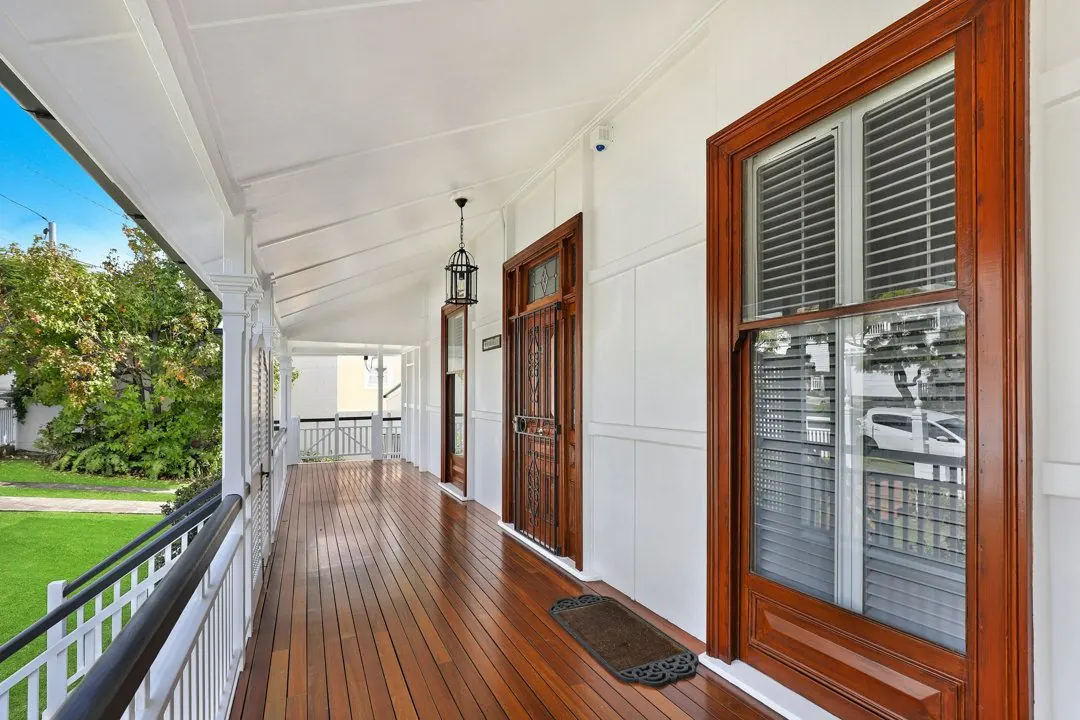
Choosing a screen for a Georgia porch.
Rescreening is the cheapest time to change the mesh. Each type trades airflow, visibility and toughness a little differently.
Standard fiberglass
The default for most porches: affordable, doesn’t dent or rust, and easy to work with. Charcoal reads clearest from inside. It tears more easily than heavier screens and gets brittle with years of sun.
Pet-resistant screen
A much heavier vinyl-coated polyester that stands up to claws and paws. It’s thicker, so it’s a little less see-through; many owners use it only on the lower panels and door where pets actually touch.
No-see-um & pollen-resistant
Tighter weaves that keep out tiny biting midges, and finer meshes marketed to cut down on pollen. Both reduce airflow somewhat. Useful near creeks and wetlands, or for allergy sufferers during spring pollen season.
Solar & sun-control screen
Denser screen that blocks a share of the sun’s heat and glare. It makes a real difference on west- and south-facing porches in a North Atlanta August, at the cost of some view and breeze.
Aluminum
Stiffer and crisper-looking than fiberglass, but it dents and creases, and it can oxidize over time. Less common on new porches now, though some older homes still have it.
Mixing types
Nothing says every panel has to match. Pet screen low, standard or solar screen above, and a tighter mesh on the windward side is a common, sensible mix.
Spline, staples or a screen track system?
How the screen is held in decides how easy it is to fix next time.
- Staples and wood trim: the traditional method. Screen is stapled to the framing and covered with a wood stop or batten. It looks clean but every repair means pulling trim, and the staples and wood are where rot and rust start.
- Spline-and-channel frames: screen is pressed into a groove with a rubber spline, either in aluminum frames or a routed channel. Re-splining one panel is fast and tidy.
- Retrofit screen track systems: aluminum or vinyl base tracks are fastened to the existing posts and rails, the screen is splined into the track and a snap-on cap covers it. Several manufacturers make these. On a porch that’s been stapled and trimmed for years, switching to a track system costs more once but makes every future repair a quick spline job.
We look at what you have and give you the option of a straight rescreen in the existing method or an upgrade to track, with the price difference spelled out.
Georgia porches: pollen, storms and sun
Screens in North Atlanta have a hard life. Spring pollen loads the mesh yellow, summer thunderstorms blow rain and debris through, oak and pine canopy drops twigs and acorns, and full afternoon sun on a west-facing porch breaks down fiberglass faster. A few things help:
- Rinse screens gently with a hose and soft brush after pollen season. A pressure washer will tear or stretch them.
- Keep gutters on the porch roof clear so overflow doesn’t sheet onto screens and rails.
- Fix small holes early, before wind and pets turn them into a full panel.
- Consider solar screen on the hottest walls and pet screen on the low panels.
For layout and finishing ideas if you’re updating more than the screens, browse our screened porch ideas and porch ceiling ideas.
What porch screen repair costs
Rough 2026 ranges for our area, not a quote. Panel size, screen type, how the screen is held in, how high the panels are and whether the framing needs repair all change the price, and a small job usually carries a minimum trip charge.
- Rescreening with standard fiberglass: very roughly $3–8 per sq ft of screen, which works out to something like $75–200 for a typical full-height porch panel when several are done together.
- Pet, no-see-um or solar screen: expect the upper end of that range or somewhat above, since the material costs more.
- Retrofit screen track system: priced per linear foot of track on top of the screen; worth it on porches you plan to keep for years.
- Screening in an existing covered deck or porch from scratch: typically $15–35 per sq ft of floor area, including framing, screen and a door.
- Rotted framing, rails and doors: priced after we’ve looked.
For a bigger project, the screened porch cost calculator estimates a new porch or a screen-in of an existing deck. If the porch floor or the deck under it is soft, that’s a deck repair conversation first.
We repair and rescreen porches in Roswell, Alpharetta, Johns Creek, Milton, Sandy Springs, Dunwoody, Marietta, Woodstock and north Atlanta. If you’re searching for porch screen repair near me, send a photo of the damaged panels and a rough count, and we’ll give you a ballpark before we visit.
Related guides: screened porch under a deck · screened porch vs sunroom · covered deck ideas
Questions about rescreening a porch.
How much does it cost to rescreen a porch?
As a rough guide around North Atlanta, rescreening with standard fiberglass is very roughly $3–8 per sq ft of screen, or about $75–200 per typical panel when several are done together. Pet, no-see-um and solar screen cost more, and framing repairs are extra. That’s a rough range, not a quote.
Can you repair just one torn porch screen panel?
Yes. Single panels are fine, though a minimum trip charge usually applies. If the rest of the screen is old and faded, a new panel will stand out, so it’s worth pricing the whole porch too.
What is the best screen for a porch with pets?
Pet-resistant screen, a heavy vinyl-coated polyester. It’s much tougher than fiberglass but a little less see-through, so many people use it only on lower panels and the door, with standard screen above.
Do no-see-um screens reduce airflow?
Somewhat. The tighter weave that stops tiny biting insects also lets less air through. On most porches the difference is noticeable but not a deal-breaker; ceiling fans make up for it.
How long do porch screens last in Georgia?
It varies with sun exposure, pets and storms. Fiberglass on a shaded porch can last many years; on a west-facing wall in full sun it gets brittle sooner. Damage from pets and kids usually ends a screen’s life before age does.
Is a screen track system worth it?
If you plan to keep the porch for years, often yes. It costs more than re-stapling, but future repairs become quick spline jobs with no trim to pull, and the screen stays tighter.
Stop staring at that tired old deck. Let’s draw something better.
Free in-home consultation. Honest material guidance. A clear, fixed-price quote you can take to the bank — usually within 48 hours of our visit.
Mon–Fri 7a–6p · Sat 8a–4p · Real local crews · No call centers