Screened Porch vs Sunroom: Cost, Comfort and Which to Build
In the screened porch vs sunroom decision, a screened porch costs far less and feels like being outdoors, while a sunroom costs two to four times as much but works as a real room in every season. In between sit vinyl window panel enclosures and three-season rooms, which block wind, rain and much of the pollen without full heating and cooling.
- A new screened porch typically runs $90–180 per sq ft in North Atlanta; screening in an existing covered deck is $15–35 per sq ft.
- Adding clear vinyl window panels to a porch is about $8,000–20,000 for a typical porch, and it’s the cheapest way to stretch the season.
- Nationally, a three-season room is roughly $25,000–80,000 and a four-season sunroom roughly $40,000–120,000 or more.
- Only a four-season room is truly comfortable in a Georgia July and January, because it’s insulated and conditioned like the rest of the house.
- A porch framed with panels or windows in mind can be upgraded later, which lets you start with screens and decide after a few seasons.
Screened porch vs sunroom: the four options
People use “sunroom” for everything from a screened porch with plastic panels to a glass-walled family room. The labels matter because they map to very different budgets, so here’s what each one usually means.
Screened porch
A roofed outdoor room with insect screen in the openings. Air, sound and humidity pass straight through. It’s the least expensive option, the coolest feeling on a breezy summer evening, and the most porch-like. Rain blows in during storms, and spring pollen settles on everything.
Porch enclosure with vinyl window panels
A screened porch with clear vinyl panels in sliding frames fitted into the openings. Close them and you block wind, rain and much of the pollen; open them and you’re back to a screened porch. They aren’t insulated, so the room tracks the outdoor temperature.
Three-season room
A room built with framed walls, a roof and windows, usually single-pane glass or acrylic, without a full insulation package or ducted heating and cooling. It feels more like an interior room than a porch and is comfortable in spring and fall.
Four-season room
A true sunroom built to the same standards as a home addition: an insulated floor and foundation, insulated walls and roof, energy-rated insulated glass and heating and cooling. It’s conditioned living space you can use year-round.
Screened porch vs sunroom cost comparison
The porch figures below are our typical 2026 installed ranges for North Atlanta. The sunroom and enclosure figures are broad national ranges for a typical-size room, because pricing for those depends heavily on the system, glass and finishes. None of these are quotes.
| Option | Typical cost | Usable seasons in Georgia | Heated and cooled? |
|---|---|---|---|
| Screen in an existing covered deck | $15–35 per sq ft | Spring, summer with fans, fall | No |
| New screened porch with roof | $90–180 per sq ft | Spring, summer with fans, fall | No |
| Vinyl window panels added to a porch | About $8,000–20,000 for a typical porch | Most of the year, mild winter days | No (space heater possible) |
| Three-season room | Roughly $25,000–80,000 | Spring and fall; mild winter days | No, or a small unit |
| Four-season sunroom | Roughly $40,000–120,000+ | Year-round | Yes |
For a 12×16 ft (192 sq ft) space, a new screened porch typically lands around $17,300–34,600, compared with a four-season sunroom that can easily run two to four times as much. Screening in a deck that already has a roof can come in under $7,000. Use the screened porch cost calculator to price your size and finishes.
What drives sunroom cost
- Foundation and floor: a room over an existing deck usually needs new footings and framing sized for walls, glass and a roof.
- Glass: large insulated, low-E window and door units are a major line item.
- Roof: a shingled roof tied into the house costs more than a manufactured panel roof, but matches better.
- HVAC: a ductless mini-split is common for sunrooms; extending ductwork is another option.
- Interior finishes: drywall, flooring, trim and electrical bring it up to living-room standard.
Vinyl window panel enclosures (the “Eze-Breeze” type)
If you’ve searched for a porch enclosure, you’ve probably seen Eze-Breeze, the best-known brand name in this category. Many people use the name for the whole product type: clear or tinted vinyl panels in aluminum or vinyl frames that slide up and down, or side to side, in front of the porch screens. Several manufacturers make similar systems, and we’re describing the category here, not recommending a brand.
How they work
Each opening gets a frame with several stacked panels on separate tracks. Slide them together and you open most of the opening to the screen behind; slide them apart and the opening is closed. Most systems keep a fixed screen in place, so the porch still works as a screened porch with the panels open.
Pros
- Far cheaper than glass walls or a sunroom.
- Keep out wind-driven rain, so cushions and floors stay dry in summer storms.
- Cut down on the spring pollen that coats a screened porch, though some still gets in.
- Light enough to install in most existing porch openings without major structural work, if the framing is sound and square.
Cons
- No insulation value. On a hot afternoon, a closed vinyl enclosure gets warmer than an open screened porch.
- Vinyl scratches more easily than glass and needs gentle cleaning with mild soap and a soft cloth.
- Clarity can decline over years of sun exposure. Check the current warranty on the specific product line.
Eze Breeze windows cost
Cost depends on the number and size of openings, the panel configuration and whether the porch framing needs adjusting. For a typical screened porch, expect roughly $8,000–20,000 installed. Custom shapes, doors and very tall gable openings push that higher. Get a quote that lists each opening and what the framing needs.
Three season room cost and limits
A three-season room is the middle ground: real windows and walls, but without the insulation and HVAC that make a room usable in all weather. Three season room cost nationally runs roughly $25,000–80,000 depending on size, glass and whether it’s a manufactured kit or site-built.
In North Atlanta, the “three seasons” aren’t quite the ones the name suggests. Spring and fall are lovely. Winter is often mild enough on sunny days. Summer is the problem: a glass room in full Georgia sun with no air conditioning can get far hotter than outside, even with fans. If summer is when you most want to use the space, a screened porch with good fans may actually be more comfortable, and a four-season room is the only option that solves the heat.
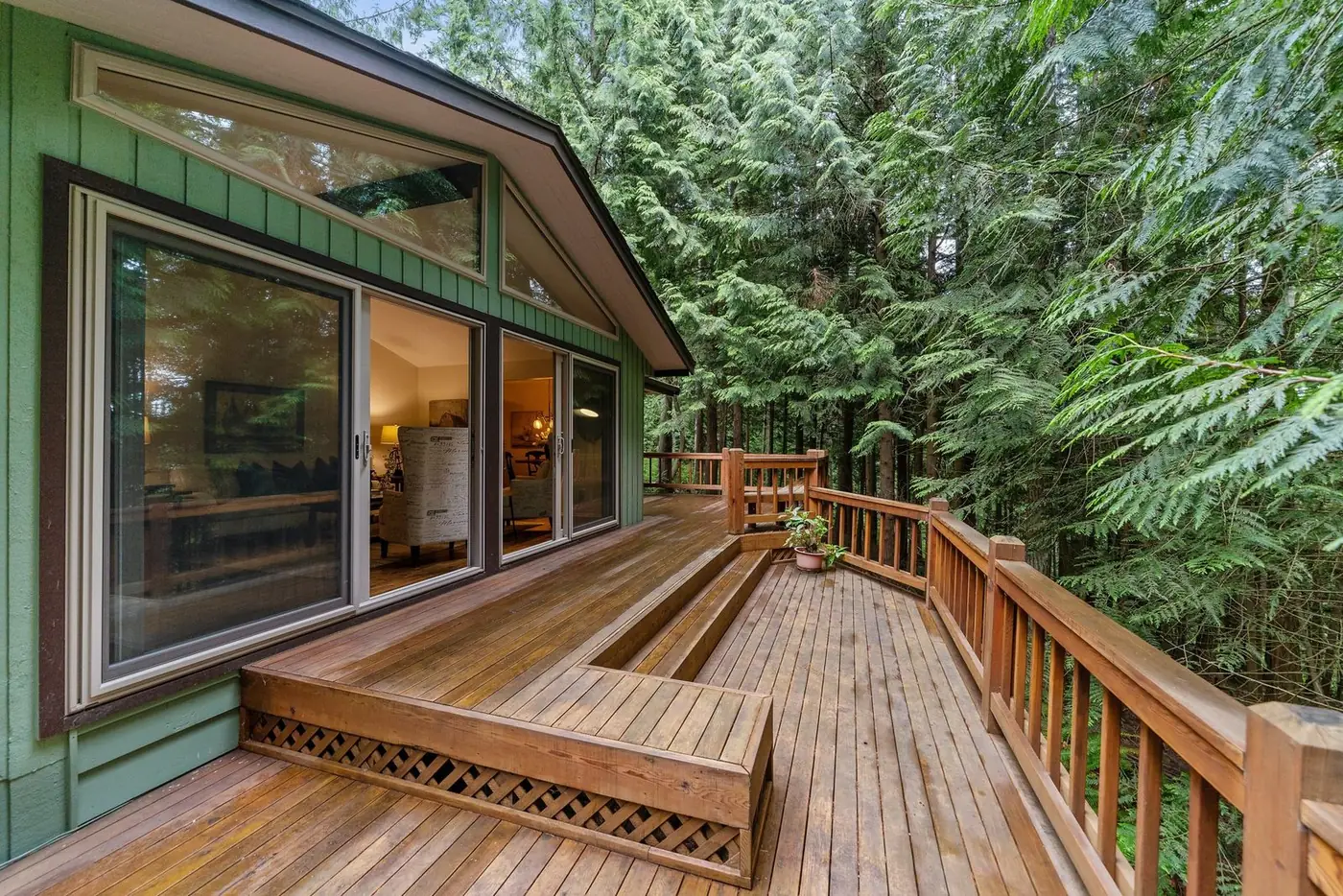
Large glass walls like the ones above bring in light and views, but on a sunroom they also bring in heat. Orientation and shade trees matter as much as the glass.
Four season room: what makes it a real sunroom
A four season room is an addition to the house that happens to have a lot of glass. To be comfortable year-round, and to pass inspection as conditioned space, it typically needs:
- A foundation and floor system designed for an enclosed room, with insulation below.
- Insulated walls and roof, built like the rest of the house.
- Insulated, energy-rated glass. Low-E coatings help a lot in the Georgia sun.
- Heating and cooling sized for all that glass.
- Electrical outlets, lighting and smoke detection consistent with a habitable room.
Because it’s conditioned space, a four-season room usually goes through the same plan review as any addition, including energy code requirements. That’s why sunroom cost climbs well past a screened porch: you’re building a room, not a porch.
Comfort through a Georgia year
- March–April: pine pollen season. Screened porches get coated; vinyl panels and glass rooms stay much cleaner. Many families enclosed porches for this reason alone.
- May–September: heat, humidity and afternoon thunderstorms. Screened porches with ceiling fans are pleasant in shade; unconditioned glass rooms overheat; four-season rooms are comfortable with AC.
- October–November: the best porch weather of the year for every option.
- December–February: mostly mild with cold snaps. Vinyl enclosures and three-season rooms work on sunny days or with a heater; screened porches need a fireplace or heater; four-season rooms are fully usable.
Bugs matter too. All of these options keep out mosquitoes as long as doors seal and floors are tight, but a screened porch relies entirely on the screen.
Permits, HOAs and resale
Any new roofed structure attached to the house generally needs a building permit in Roswell, Alpharetta, Johns Creek, Milton and the other North Fulton cities. A four-season room is reviewed as an addition. Adding vinyl panels to an existing porch may or may not need a permit, so check with your city’s permit office before ordering. Most HOAs in the area want to review exterior changes, including enclosures, so build that into the timeline.
On resale, a conditioned sunroom may be counted as heated living area while a screened porch usually isn’t; how a room is treated for appraisal and property tax varies, so ask your county assessor or an appraiser if that matters to your decision. Our North Fulton deck permits guide covers the permit process in more detail.
How to decide
- Choose a screened porch if you want outdoor air, mostly use the space spring through fall and want the most room for the money.
- Add vinyl panels if pollen, blowing rain or chilly evenings are your main complaints about a porch you already have.
- Choose a three-season room if you want an interior feel for spring and fall and can live without it in the hottest weeks.
- Choose a four-season room if you need another living space you’ll use every month and the budget supports an addition.
A practical route is to build a well-framed screened porch now, with openings sized and squared to take panels or windows later. See screened porch ideas for layouts and finishes, and covered decks and pergolas if you mainly want shade.
Screened porch vs sunroom questions
Is a sunroom more expensive than a screened porch?
Yes, usually by a wide margin. A four-season sunroom is built like a home addition, with insulation, insulated glass and heating and cooling, so it often costs two to four times what a screened porch of the same size does.
Can you convert a screened porch into a sunroom?
Often, but the floor, foundation and roof have to be checked for the extra load and for insulation. Adding vinyl panels is simple; converting to a four-season room is closer to building an addition and needs a permit.
How much do vinyl porch windows cost?
For a typical screened porch, vinyl window panel systems of the Eze-Breeze type run roughly $8,000–20,000 installed, depending on the number and size of openings and any framing work.
What is the difference between a three season room and a four season room?
A three-season room has walls and windows but no full insulation or HVAC. A four-season room is insulated, uses energy-rated glass and is heated and cooled, so it’s usable year-round as part of the house.
Is a screened porch or sunroom better in Georgia?
For most North Atlanta homeowners, a screened porch gives the most use per dollar because spring, fall and shaded summer evenings are so pleasant. A four-season room makes sense if you need year-round living space and can budget for an addition.
Related
- Services: screened porches, pergolas and covered decks, custom decks
- Tools: screened porch cost calculator, deck cost calculator
- Guides: screened porch ideas, porch ceiling ideas, pergola vs gazebo
- Areas we serve: Roswell, Alpharetta, Johns Creek and every North Fulton service area
Stop staring at that tired old deck. Let’s draw something better.
Free in-home consultation. Honest material guidance. A clear, fixed-price quote you can take to the bank — usually within 48 hours of our visit.
Mon–Fri 7a–6p · Sat 8a–4p · Real local crews · No call centers