Pergola vs Gazebo: Which Fits Your Deck and Yard?
In the pergola vs gazebo decision, the core difference is the roof: a pergola has an open grid of beams and rafters that filters sun but lets rain through, while a gazebo has a solid roof that keeps you dry. Pergolas are usually cheaper and easier to put on an existing deck; gazebos are usually freestanding garden structures with their own floor.
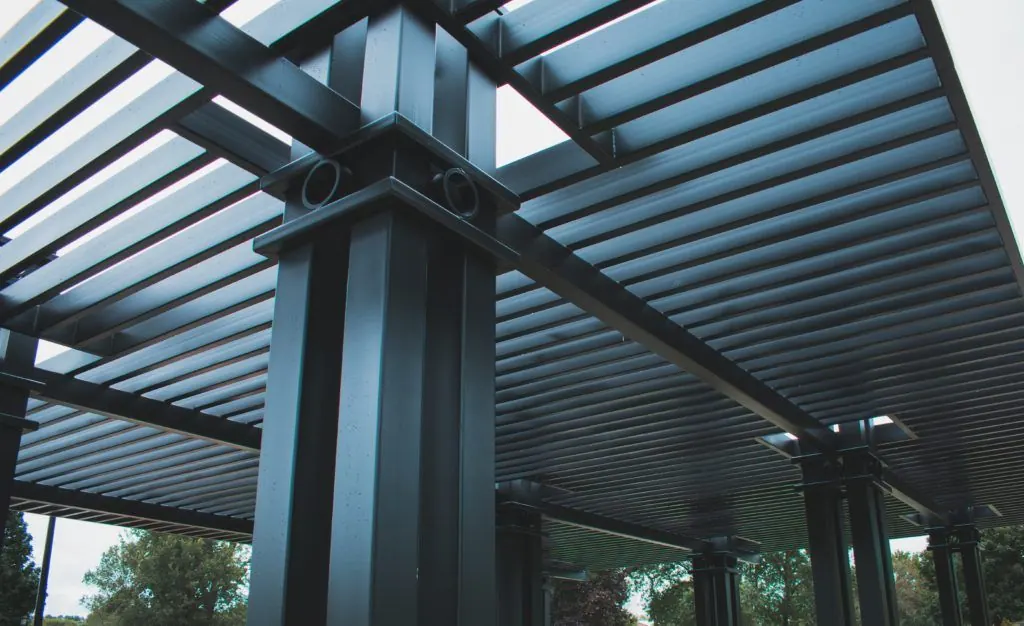
- Pergola: open roof, partial shade, no rain protection unless you add louvers or panels. Easy to attach to a deck or house.
- Gazebo: solid roof, full shade and rain cover, usually freestanding with its own floor and a round or many-sided shape.
- Pavilion: a larger, usually rectangular open-sided structure with a solid roof, built for groups and outdoor kitchens.
- Typical North Atlanta 2026 pergola cost: about $4,000–12,000 for wood, $15,000–40,000+ for a motorized aluminum louvered pergola.
- Anything attached to the house or deck almost always needs a permit; small freestanding structures may not. Check with your city and HOA.
Pergola vs gazebo: the real difference
People use the words loosely, and plenty of products are sold under both names, so it helps to define them by what they do.
What a pergola is
A pergola is a set of posts carrying beams, with a layer of rafters or slats across the top. The top is open. It casts striped, moving shade that is noticeably cooler than full sun, and it gives a deck or patio a sense of being an outdoor room. Pergolas are usually square or rectangular, can be freestanding or attached to the house, and often sit directly on a deck. They are also a frame for things: climbing vines, string lights, ceiling fans on a covered section, outdoor curtains or a retractable canopy.
What a gazebo is
A gazebo is a roofed structure, traditionally octagonal or hexagonal, with a solid roof (shingles, metal or cedar shakes) that comes to a peak. Most stand on their own in the yard or garden, often on a raised wood floor or concrete pad, sometimes with built-in benches, railings or screens. It is a destination: somewhere you walk out to, rather than an extension of the house.
So the short version: a pergola shapes and softens a space you already use. A gazebo creates a new, sheltered one.
Side-by-side comparison
Here is how the two, plus a pavilion, compare on the things homeowners in Roswell and Alpharetta actually ask about. Costs are typical North Atlanta installed ranges for 2026, not quotes.
| Pergola | Gazebo | Pavilion | |
|---|---|---|---|
| Shade | Partial, filtered; more with dense slats, vines or a canopy | Full shade under the roof | Full shade under the roof |
| Rain protection | None, unless louvered or fitted with panels | Yes | Yes |
| Typical shape | Square or rectangle | Octagon or hexagon, peaked roof | Large rectangle, gable or hip roof |
| Typical cost | Wood $4,000–12,000; aluminum louvered $15,000–40,000+ | Usually more than a wood pergola of similar size; varies widely from kits to custom builds | Priced like a roofed structure; rises quickly with size, a slab, electrical or a fireplace |
| Permits | Usually required when attached to the house or deck | Small freestanding units may be exempt; larger ones usually need one | Usually required |
| Attach to a deck? | Yes, very common | Rarely; usually freestanding | Occasionally over a deck, more often over a patio |
| Upkeep | Wood needs stain/seal; aluminum very little | Roof plus wood finish | Roof, gutters, finish |
Pergola vs pavilion, and gazebo vs pavilion
Pergola vs pavilion
A pavilion is what you get if you take a pergola’s rectangular, post-and-beam layout and put a real roof on it. It is usually bigger, often 12 by 16 feet or larger, with a gable or hip roof, a ceiling, lights and a fan. Pavilions are popular over outdoor kitchens, fire pits and pool-side seating because they handle summer storms. The trade is cost and permitting: a roof carries much more load than open rafters, so the posts, beams and footings get bigger.
Gazebo vs pavilion
Both have solid roofs. A gazebo tends to be smaller, round or many-sided, and often has its own floor and railings, which makes it feel enclosed and intimate. A pavilion is usually rectangular, open on all sides and sits on a patio or slab, which makes it easier to fit a long dining table or an outdoor kitchen under. If you want room for a crowd, a pavilion; if you want a quiet garden retreat, a gazebo.
If what you really want is a roofed area directly off the back of the house, attached to the deck, the right comparison may be a covered deck rather than either. Our guide to covered deck ideas covers roof styles and costs for that route.
Pergola cost and gazebo cost in North Atlanta
These are typical installed ranges we use for planning in Roswell, Alpharetta, Johns Creek and the rest of North Fulton. Size, materials, access and site conditions move the final number.
Pergola cost
- Wood pergola: about $4,000–12,000. Pressure-treated pine sits at the low end; cedar, larger sizes, heavier timbers and decorative rafter tails push it up. Stain or paint adds to the cost, and in Georgia’s sun and humidity, wood needs refinishing every few years.
- Aluminum louvered pergola: about $15,000–40,000+. Driven by size, motorization, integrated gutters, lighting, screens and heaters.
- Add-ons: fans, lighting and outlets (which need an electrician and permit), privacy screens, retractable canopies and planters.
Gazebo cost
Gazebo prices vary more than pergola prices, because they range from boxed kits to fully custom, site-built structures with shingled roofs, floors, railings and screens. A custom-built gazebo generally costs more than a wood pergola of similar footprint, because it adds a roof frame, sheathing, roofing, flashing and usually a floor. Get a specific quote rather than relying on an online average.
Permits and plans
Budget roughly $250–800 for permits and drawings on a typical project where a permit is required. Electrical work is usually a separate permit.
To see how a pergola changes the total for a new deck, use our deck cost calculator, or read the full deck cost guide for Atlanta.
Louvered pergolas: the middle ground
A louvered pergola has aluminum slats in the roof that rotate, usually by motor. Open, it behaves like a pergola, letting in light and breeze. Closed, the louvers interlock and channel rain into gutters built into the beams and down through the posts. That makes it the closest thing to having both a pergola and a gazebo in one structure, attached right to the deck.
A few things to know before you commit:
- Louvered pergola cost is high compared with a wood pergola: plan on $15,000–40,000+ installed in North Atlanta.
- They need solid support. Aluminum systems are heavy and catch wind when closed. On a deck, the framing and footings under each post are often reinforced.
- Pollen and leaves are a real factor here. Each spring the louvers and gutters collect a yellow film of pine pollen, and fall brings oak leaves. Rinsing them is easy, but under a heavy tree canopy it is regular work.
- Check the warranty and service. Motors, sensors and finishes have their own warranty terms; check them for the specific product line.
Putting one on a deck
A pergola very often goes on a deck rather than a patio, so this is where the details matter.
Pergolas on decks
A pergola on an existing deck needs each post carried down to something solid. Bolting a post to the decking alone is not enough; the post should land over framing that is blocked and connected for the load, ideally directly over a beam and post with a proper footing below. Wind is the bigger concern than weight: a pergola acts like a lever on its post bases. On new decks we plan pergola posts into the framing from the start, which is much cheaper than retrofitting.
Gazebos and decks
Gazebos are rarely built on top of decks, because their roof loads and many-sided shape don’t line up with a deck’s joist layout. More often a gazebo sits on its own floor out in the yard, connected to the deck by a path or a short boardwalk. On a sloped North Fulton lot, that can be a nice way to create a second destination down the hill.
Permits and HOA review
Under the IRC, a small one-story detached accessory structure (200 square feet or less) can be exempt from a building permit, but local rules vary and zoning setbacks still apply. Anything attached to the house or the deck generally needs a permit. Most North Atlanta HOAs want to approve the design, color and materials of any new structure, so start that application early.
How to choose
- Choose a pergola if you want to shade and define the deck you already have, you are happy with filtered light, and you want the lowest cost.
- Choose a louvered pergola if you want the pergola look and a dry space during summer storms, and the budget allows.
- Choose a gazebo if you want a separate, sheltered spot out in the garden or down the slope, away from the house.
- Choose a pavilion or a covered deck if you want a full roof for dining, a TV or an outdoor kitchen. If bugs are the deal-breaker, a screened porch is the next step up.
See our pergolas and covered decks page for how we design and build each option, including attached versus freestanding pergolas.
Pergola vs gazebo FAQ
Which is cheaper, a pergola or a gazebo?
A wood pergola is usually cheaper than a custom gazebo of the same size, because it has no roof sheathing, roofing or floor. In North Atlanta, wood pergolas typically run about $4,000–12,000 installed. Louvered aluminum pergolas cost more, about $15,000–40,000+.
Does a pergola keep rain out?
A standard pergola does not. You can add clear polycarbonate panels or a retractable canopy, or choose a louvered pergola whose closed louvers shed rain into built-in gutters.
What is the difference between a gazebo and a pavilion?
Both have solid roofs. A gazebo is usually smaller and round or many-sided, often with its own floor and railings. A pavilion is usually larger and rectangular, open on all sides, and sits on a patio or slab, which suits dining tables and outdoor kitchens.
Can you put a pergola on an existing deck?
Often, yes, if the posts can be anchored to framing that is reinforced for the load and ideally carried down to footings. Wind uplift is the main concern. A builder should check the deck framing before adding one, especially for a heavy louvered system.
Do I need a permit for a pergola or gazebo in Georgia?
It depends on size, attachment and your city. Attached structures and larger ones generally need a permit; small detached ones may be exempt. Zoning setbacks and HOA approval apply either way, so check with your permit office before you buy.
Related
- Services: pergolas and covered decks, screened porches, custom decks
- Tools: deck cost calculator, screened porch cost estimator, pergola cost calculator
- Guides: covered deck ideas, screened porch ideas, screened porch vs sunroom
- Areas we serve: Roswell, Alpharetta, Johns Creek and every North Fulton service area
Stop staring at that tired old deck. Let’s draw something better.
Free in-home consultation. Honest material guidance. A clear, fixed-price quote you can take to the bank — usually within 48 hours of our visit.
Mon–Fri 7a–6p · Sat 8a–4p · Real local crews · No call centers