Deck Lighting Ideas: Where to Put Lights and How to Install Them
The best deck lighting ideas start with safety, lighting every stair and level change, and then add soft, low glare light along the rails and around seating. For most decks a low-voltage LED system on a plug-in transformer is the sweet spot: brighter and more reliable than solar, and much simpler to install than full 120-volt wiring.
- Light the stairs first. Riser or tread lights on every step are the single most useful deck light.
- Low-voltage (12V) LED is the standard for decks; solar is fine for accents but weak under heavy tree canopy.
- Size the transformer to the total fixture wattage with headroom, and use a timer or photocell.
- Warm white light (around 2700–3000K) looks best on wood and composite and is easier on neighbors and insects.
- New outdoor outlets, circuits or 120V fixtures are electrical work that may need a licensed electrician and a permit.
Plan your deck lighting in layers
Good deck lighting rarely comes from one bright fixture. It comes from several dim ones, each doing a job. We think about it in three layers:
- Safety light. Stairs, landings, level changes, the path from the deck to the yard and the door to the house. This is the layer you should never skip.
- Ambient light. A low, even glow along rails, posts and the deck edge that lets you see the space without washing it out.
- Task and accent light. Brighter light at the grill or outdoor kitchen, a pendant or downlight over the table, and a few uplights on a tree or a pergola beam for atmosphere.
Sketch your deck, mark every step and level change, then mark where people sit, cook and walk. That map tells you where fixtures go far better than a product catalog. If you’re planning a new deck, it’s much easier to run wire and drill for fixtures during the build; mention lighting at the deck design stage.
Deck lighting ideas by location
Stair riser and tread lights
Small LED lights recessed into each stair riser, or mounted under the nose of each tread, wash light across the step below. They show exactly where each tread edge is without shining in anyone’s eyes. On composite stairs, most decking brands sell matching riser lights sized to fit their riser boards. Put a light on every step, not every other one, so there are no dark treads. For stair layouts that suit lighting, see our deck stairs ideas.
Post cap lights
Post cap lights replace the cap on top of each railing post and throw light down and out. They’re the most recognizable deck light and a good way to mark the deck outline from the yard. Choose caps that shield the light downward; bare, bright caps can glare at eye level for anyone seated. Many come in sizes to fit 4×4 wood posts and composite post sleeves, so measure your posts.
Under-rail strip and puck lights
LED strips or small puck lights mounted on the underside of the top rail cast a soft line of light down the balusters onto the deck surface. This is one of the nicest effects for a deck used for evening dining: the light is low, the source is hidden, and nothing glares. It works with wood, composite, aluminum and cable railings. Our deck railing styles page shows which rails have room for a hidden strip.
Post side lights and accent sconces
Small lights mounted on the face of posts, partway down, mark the deck perimeter at a lower height than cap lights. They’re a good choice where you want to light the floor without lighting the view.
In-deck recessed lights
Small round lights set flush into deck boards or the fascia mark the edge of a deck, a step-down or a path. Drilling into composite or PVC boards needs care and the right hole size; check the decking manufacturer’s guidance so the warranty isn’t affected.
String lights and pergola lighting
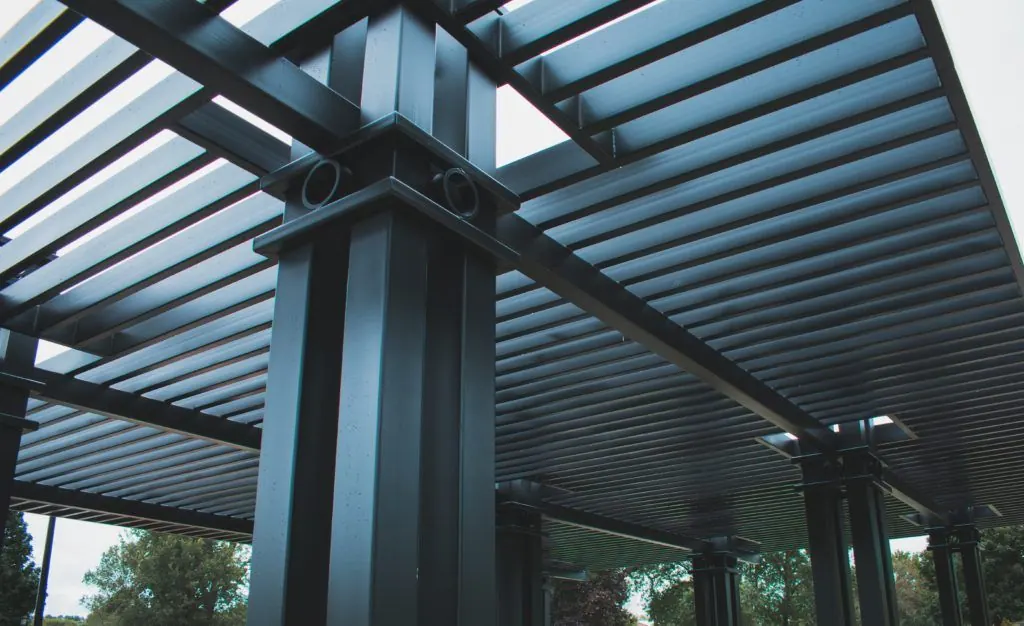
Bistro string lights over a seating area are the easiest way to make a deck feel like a room at night. Run them on a steel guide wire between sturdy posts or a pergola, rather than hanging their weight off the light cord. A pergola also gives you beams for small downlights over a table, or a fan with a light kit if the structure is designed for it.
Under-deck and porch ceiling lights
If you’ve finished the space under a second-story deck, recessed lights or a ceiling fan with a light turn it into a usable patio. The same goes for a covered deck or screened porch, where a pendant lantern or ceiling fixture becomes the main light. See porch ceiling ideas and under-deck ceilings.
Landscape and path lights
A few path lights where the stairs meet the yard, and an uplight on a big oak or magnolia, connect the deck to the garden and stop the yard from feeling like a black wall beyond the rail.
Low-voltage vs solar vs 120V deck lights
| Low-voltage (12V) LED | Solar | Line-voltage (120V) | |
|---|---|---|---|
| Brightness | Consistent, adjustable | Dim, varies with sun | Bright |
| Wiring | Low-voltage cable from a transformer | None | Code-compliant wiring, boxes, GFCI |
| Who installs | Deck builder or handy homeowner, plugged into an existing outdoor outlet | Anyone | Licensed electrician |
| Reliability | High | Batteries and panels wear out | High |
| Best for | Most deck lighting | Accents, temporary or remote spots | Ceiling fans, outlets, large fixtures |
Low-voltage LED
Low-voltage systems run at around 12 volts from a transformer that plugs into an outdoor outlet. The low-voltage cable can be stapled under rails and run through framing, and the fixtures are small. LED fixtures draw very little power, so one transformer can run a whole deck. Most composite decking brands sell their own matched lighting kits, and there are good independent brands too.
Solar
Solar post caps and step lights need no wiring at all, which makes them tempting. In North Atlanta the problem is shade: under a canopy of oaks and pines, or on a north-facing deck, the panels don’t charge well, and the light fades early in the evening or fails on cloudy winter days. Solar is fine for a few accent lights in a sunny spot, but we don’t rely on it for stair safety lighting.
120V line voltage
Standard household-voltage fixtures, outdoor outlets and ceiling fans need proper boxes, weather-rated covers, GFCI protection and wiring to code. That’s electrical work. In Georgia, electrical work is generally done by a licensed electrical contractor, and adding circuits or outlets may need an electrical permit; check with your permit office.
Deck lighting installation basics
Transformer basics
- Add up the watts. List every fixture and its wattage. That total is your load.
- Leave headroom. A common rule of thumb is to load a transformer to no more than about 80% of its rated capacity, which leaves room for adding lights later.
- Plug into a protected outlet. Plug-in transformers go into a GFCI-protected outdoor receptacle with a weatherproof in-use cover. If there’s no outlet near the deck, have an electrician add one.
- Control it. Most transformers have a built-in timer, photocell (dusk sensor) or app control. Dusk-to-a-set-time is the most practical setting.
Wire runs and voltage drop
Long, thin cable runs lose voltage, and the lights at the far end look dimmer. Keep runs short, use the cable gauge the lighting maker recommends, and split long decks into more than one run from the transformer rather than one long daisy chain. Many deck lighting kits use plug-together connectors and spec their own cable, which keeps this simple.
Hiding the wires
- Run cable along the underside of rails and the inside face of posts, or route it through drilled framing and post sleeves before the caps go on.
- Keep cable off the ground under low decks where it can sit in water or be chewed, and use clips rated for outdoor use.
- Leave a short service loop at each fixture so it can be pulled out and replaced.
New deck or retrofit?
On a new deck we plan fixture locations with the framing and run cable before the decking, fascia and riser boards go on. Retrofitting an existing deck is very doable with surface-mounted fixtures and careful cable routing, but recessed riser lights are harder to add once stairs are built. If you’re replacing old boards, a deck resurfacing project is a good moment to add wiring.
Color, glare, bugs and fireflies
Pick warm white
Color temperature is measured in kelvin (K). Warm white around 2700–3000K flatters wood tones and brown or grey composite and feels relaxed. Cool white (4000K and up) can look harsh and clinical on a deck. Some systems offer color-changing LEDs; they’re fun for a party but most people leave them on warm white.
Avoid glare
The goal is to see the light, not the bulb. Shielded fixtures that point down, hidden strips under rails, and dimmable transformers keep the deck comfortable and keep light out of the neighbors’ windows. Some HOAs have rules about exterior lighting, so check before installing bright floods.
Bugs and fireflies
Many people find that warmer, amber-toned light draws fewer insects to the deck than bright cool-white light. Georgia’s early-summer fireflies are part of the evening here too, and their flashing is easier to enjoy, and less disrupted, when yard lighting is low, warm and on a timer that switches off later in the night.
Lighting a deck in North Atlanta
- Humidity and storms. Choose fixtures rated for wet locations, use sealed connectors, and keep the transformer off the ground. Summer thunderstorms drive rain sideways under rails.
- Pollen and leaves. Lens covers and riser lights collect pine pollen in spring and leaf grit in fall. Wipe them during your deck cleaning routine so they stay bright.
- Tall decks on sloped lots. Many Roswell and Sandy Springs decks have long stair runs down to the yard. Light every step and the landing; that run is the most-used and most dangerous part of the deck after dark.
- Mosquito season. Fans and screening do more than lighting to keep mosquitoes away. If evenings outside are the goal, a screened porch may be the bigger upgrade.
Whether you’re lighting a new deck or adding to an old one, we can plan fixture locations and low-voltage wiring as part of the build, and coordinate with a licensed electrician for any new outlets or 120V work.
Common questions about deck lighting
What is the best lighting for a deck?
For most decks, low-voltage LED lighting in warm white: riser lights on every stair, under-rail strips or post lights for a soft glow, and string lights or a downlight over the seating area. It’s brighter and more reliable than solar and simpler than 120V wiring.
Are solar deck lights any good?
They work for accents in sunny spots. On shaded decks under trees, or in winter, they often charge poorly and fade early, so we don’t recommend relying on them for stair lighting.
Do I need an electrician to install deck lights?
A plug-in low-voltage system that connects to an existing GFCI outdoor outlet usually doesn’t. Adding a new outlet or circuit, or installing 120V fixtures and ceiling fans, is electrical work that may need a licensed electrician and a permit. Check with your local permit office.
What size transformer do I need for deck lights?
Add up the wattage of every fixture, then choose a transformer rated well above that total. A common rule of thumb is to keep the load at or below about 80% of the transformer’s capacity so there’s room to add lights later.
Can you add lights to an existing deck?
Yes. Post cap lights, under-rail strips, surface-mounted step lights and string lights all retrofit well. Recessed riser lights are easier to add when stairs are built or rebuilt, so a re-decking project is a good time to plan them.
Related pages
Services
Calculators
Guides
Areas we serve
- Deck building in Roswell, Alpharetta, Johns Creek and every North Fulton service area
Stop staring at that tired old deck. Let’s draw something better.
Free in-home consultation. Honest material guidance. A clear, fixed-price quote you can take to the bank — usually within 48 hours of our visit.
Mon–Fri 7a–6p · Sat 8a–4p · Real local crews · No call centers