Deck vs Patio: Which Is Right for Your Yard?
In the deck vs patio decision, the ground usually decides for you: a deck is the better choice when your back door sits well above the yard or the lot slopes away, and a patio usually wins on a flat yard where you can step straight out at grade. On level ground a patio is often cheaper per square foot; on a slope, the retaining walls and fill a patio needs can make a deck the more economical option.
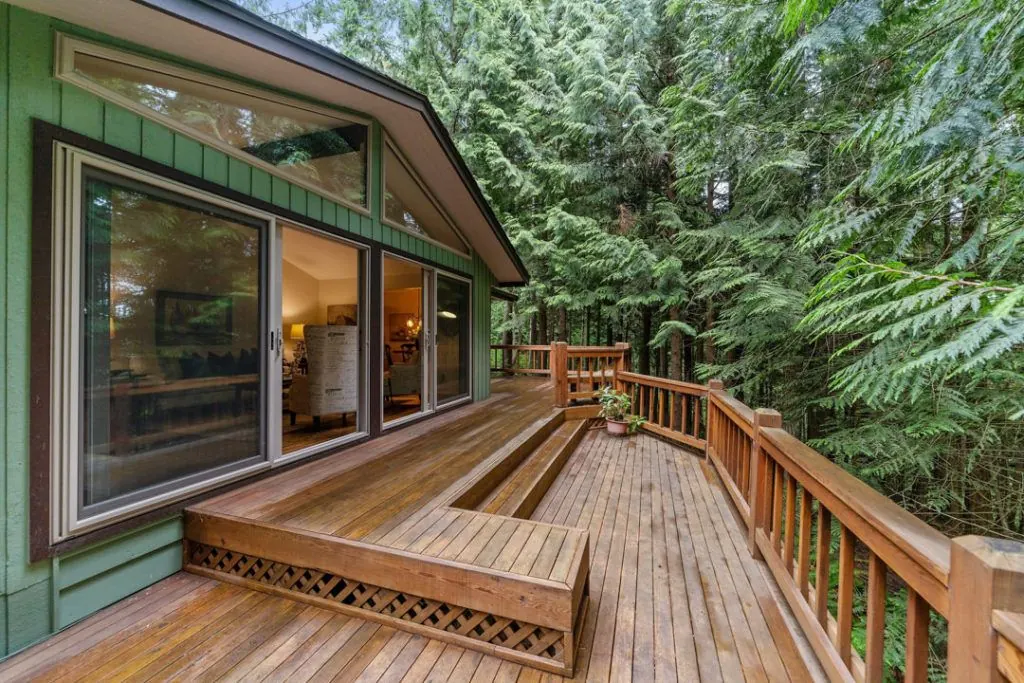
- Sloped lots, walkout basements and back doors several steps up favor a deck. Flat yards with a door near grade favor a patio.
- On flat ground, a concrete or paver patio typically costs less per square foot than a deck. On a slope, walls, fill and drainage can erase that gap.
- Typical North Atlanta deck ranges: pressure-treated pine $35–55 per sq ft installed, composite $55–85, PVC $65–95.
- Patios need less upkeep and no guardrails, but they hold heat, can crack or settle on red clay, and don’t give you a view or space underneath.
- Decks almost always need a building permit. Patios often don’t, but grading, walls and impervious-surface rules can still apply. Check with your city and HOA.
Deck vs patio at a glance
A deck is a raised platform built on posts and footings, framed in lumber and topped with wood or composite boards. A patio is a hard surface laid on the ground itself: poured concrete, stamped concrete, brick or concrete pavers, or natural stone such as flagstone. Both give you a place to eat, grill and sit outside. They just get there in very different ways.
| Deck | Patio | |
|---|---|---|
| Best site | Sloped lots, raised doors, walkout basements | Flat yards, doors at or near grade |
| Typical cost on flat ground | Higher | Usually lower |
| Typical cost on a slope | Rises modestly with height | Can climb fast with walls and fill |
| Maintenance | Wood: clean and stain every 2–3 years. Composite: wash | Sweep, wash, occasional sealing or joint sand |
| Surface heat | Wood stays cooler; dark composite gets hot | Concrete and stone store heat into the evening |
| Railings | Required once the deck is more than 30" above grade | Usually none |
| Building permit | Almost always | Often not, but depends on city and scope |
| Space underneath | Storage, shade, or a future screened room | None |
Why your lot’s slope decides most of the deck vs patio question
Drive through almost any neighborhood in Roswell, Alpharetta, Milton or Marietta and you’ll see the same pattern: houses built into rolling ground, often with a basement that walks out at the back and a kitchen door eight or ten feet above the lawn. That’s why decks are so common here. When the main floor is high off the ground, a deck is simply the most direct way to put outdoor living space level with the kitchen.
When the yard slopes away from the house
To build a patio at the level of a raised back door, you’d need to build up the ground with compacted fill and hold it in with a retaining wall. Walls are expensive per foot, taller walls usually need an engineered design, and Georgia’s red clay has to be compacted and drained properly or the patio settles and cracks. A deck skips all of that: the posts get longer, the footings go deeper, and the frame handles the slope. A tall deck does add cost for longer posts, bracing and more stairs, but far less than building a hillside.
If the slope is steep or the drop is big, a deck with two levels can step down toward the yard and avoid one long staircase. Our multi-level deck ideas guide shows how that works.
When the yard is flat
On a flat lot, especially a ranch house or a newer build with a slab-on-grade door, a patio is the natural fit. You can step straight out, there are no stairs or guardrails, and the cost per square foot is usually lower. If you still prefer the look and feel of boards underfoot, a low deck built close to the ground is an option; see our guide to the floating deck, which covers ground-level decks and the moisture issues they bring in humid Georgia yards.
Walkout basements: you may want both
A raised deck off the main floor with a patio underneath it is one of the most popular combinations around North Atlanta. The deck shades the patio, and the patio gives the basement a clean, usable floor instead of bare dirt. If you go this route, plan for water dripping between the deck boards: an under-deck drainage system or a covered deck design keeps the patio below dry. Our guide to under-deck drainage and ceilings explains the options.
Deck vs patio cost per square foot
Here are the ranges we use for decks in North Atlanta, along with rough patio figures for comparison. The patio numbers are general ballpark ranges for a straightforward, flat installation, not our quotes; patio contractors price their own work, and access, base preparation, demolition and design detail move them a lot.
| Surface | Typical installed cost per sq ft | Notes |
|---|---|---|
| Pressure-treated pine deck | $35–55 | Most common deck in the region |
| Cedar deck | $45–65 | Treated framing, cedar boards and rails |
| Capped composite deck | $55–85 | Low maintenance surface on treated framing |
| PVC deck | $65–95 | Lightest, most moisture resistant boards |
| Plain concrete patio (rough) | Often around $8–15 | Broom finish on flat, prepared ground |
| Stamped or colored concrete (rough) | Often around $15–25 | More labor and finishing |
| Concrete paver patio (rough) | Often around $15–35 | Depends on paver, pattern and base |
| Natural stone patio (rough) | Often around $25–45+ | Flagstone or bluestone on a concrete or gravel base |
All deck figures are typical ranges, not quotes, and they include framing, footings and decking but vary with height, railings and stairs. Railing adds roughly $35–60 per linear foot for wood and $70–110 for aluminum, and each stair step adds about $250–450 in wood. To see what your size and material comes to, run the numbers in our deck cost calculator.
What makes a patio cost more than you expect
- Retaining walls. Any patio that needs to be built up on one side needs a wall. Wall cost is often the single biggest line on a sloped-lot patio.
- Base work on clay. Red clay holds water and moves. A paver or concrete patio needs a properly compacted gravel base and drainage, or it heaves and settles.
- Access. Wheeling stone, gravel and concrete around a house with tight side yards adds labor.
- Steps and seat walls. These are where patio budgets grow, just as railings and stairs drive deck budgets.
What makes a deck cost more
- Height. Taller decks need longer posts, more bracing, guardrails and more stair steps.
- Material. Moving from treated pine to composite or PVC is the biggest single price jump.
- Railings and add-ons. Cable or glass railing, built-in benches, lighting and pergolas all add up.
Maintenance and lifespan
Patios win on routine upkeep. Concrete needs an occasional pressure wash and sealer; pavers need joint sand topped up and weeds or moss pulled from the joints, which in shaded Georgia yards can be a regular chore. Cracks in concrete and sunken pavers are the main long-term issues, and both trace back to the base and drainage.
Wood decks need the most attention: wash yearly, re-stain every two to three years, and check fasteners and boards for rot. Composite and PVC decks drop the staining but still need washing, especially under trees where pollen, leaves and mildew build up. A well-built deck commonly lasts 15–30 years depending on material and care; see how long a deck lasts for detail. A patio on a good base can outlast that, though individual pavers or slabs may need resetting.
Heat, shade and comfort in Georgia summers
Our long, humid summers matter more than people expect. Concrete, pavers and stone soak up sun all afternoon and radiate it back into the evening, which can make an unshaded patio uncomfortable at dinner time in July. Light-colored concrete reflects more heat than dark pavers but can be glary.
Wood decks stay cooler underfoot than most hard surfaces. Composite and PVC vary by color: dark boards in full sun can get hot enough to bother bare feet, while lighter colors stay more comfortable. On the other side, a raised deck catches more breeze and gets you up out of the mosquitoes and damp air that collect near the ground. Either way, shade does more than material. A pergola, a roof or a mature tree changes how much you’ll actually use the space between June and September.
Pollen, leaves and wet weather
Spring pollen coats everything in North Atlanta. On a patio you hose it off; on a deck it also drifts between the boards. Fall leaves and pine needles packed into deck gaps hold moisture against the framing, so decks under heavy canopy need more cleaning. Patios in deep shade grow moss and algae in their joints instead. Neither is maintenance-free in a wooded yard.
Permits, HOAs and drainage
In Georgia, decks are built to the residential code (the IRC with state amendments), and almost every attached deck needs a building permit, plans and inspections of footings and framing. Guardrails are required once the walking surface is more than 30 inches above grade, with a minimum height of 36 inches. Our North Fulton deck permits guide walks through the process.
Patios laid on grade often don’t need a building permit, but that isn’t universal. Retaining walls above a certain height, changes to grading or drainage, and work near a stream buffer can all trigger review. Many cities also count patios as impervious surface, which can matter on smaller lots. Check with your city’s permit office before you commit.
If you’re in an HOA, expect architectural review for either one. Some associations care about materials and colors, others about setbacks and visibility from the street.
Resale and how buyers see it
Both decks and patios add usable outdoor living space, and buyers in North Atlanta generally expect a house to have one or the other. Rather than chase a payback percentage, think about what fits the house. A tired, soft, wobbly deck can be a negative in an inspection report, while a solid, recently built deck with code-compliant railings is a plus. A cracked or sunken patio raises questions about drainage. Whichever you build, build it to last and keep it maintained; condition matters more to buyers than the choice between the two.
How to choose between a deck and a patio (or combine both)
- Choose a deck if your door is more than a couple of steps above the yard, the lot slopes, you want a view over the yard, or you’d like usable space underneath.
- Choose a patio if the yard is flat, the door is close to grade, you want the lowest maintenance, and you don’t need railings or height.
- Choose both if you have a walkout basement: a deck off the kitchen and a patio underneath, linked by stairs.
- Consider a low deck if the ground is flat but you prefer boards, or the soil is too wet for a good patio base.
If a deck is the right fit, our custom decks page explains how we design around your slope, doors and trees. Price your size first in the deck cost calculator, then compare it with the rough patio ranges above.
Questions about decks and patios
Is a deck or patio cheaper?
On flat ground, a basic concrete or paver patio is usually cheaper per square foot than a deck. On a sloped lot, the retaining walls, fill and drainage a raised patio needs can make a deck the cheaper way to get level outdoor space off the house.
Does a deck or patio add more value to a home?
Both add usable outdoor space, and which one adds more depends on the house and lot. A deck that suits a raised back door is worth more than a patio that doesn’t connect to it, and vice versa. Condition matters most: a sound, code-compliant deck or a level, uncracked patio helps; a failing one hurts.
Do I need a permit for a patio in Georgia?
Often not for a simple patio on grade, but rules vary by city and county. Retaining walls, grading changes, stream buffers and impervious-surface limits can all require review. Decks, by contrast, almost always need a building permit. Check with your local permit office and HOA first.
Is a deck or patio better on a sloped yard?
A deck, in most cases. The frame and posts absorb the slope, so you don’t need to build up the ground. A patio on a slope needs walls and compacted fill, which adds cost and risk of settling on clay soil. A multi-level deck can also step down a steep yard.
Which lasts longer, a deck or a patio?
A patio on a well-prepared base generally outlasts a deck, though cracks or settled pavers may need repair. Decks commonly last 15–30 years depending on material, framing quality and maintenance. Composite or PVC boards on well-protected framing sit at the long end.
Related pages
Services
Calculators
Guides
Areas we serve
- Deck building in Roswell, Alpharetta, Johns Creek and every North Fulton service area
Stop staring at that tired old deck. Let’s draw something better.
Free in-home consultation. Honest material guidance. A clear, fixed-price quote you can take to the bank — usually within 48 hours of our visit.
Mon–Fri 7a–6p · Sat 8a–4p · Real local crews · No call centers