How Long Does a Deck Last?
A typical deck lasts about 10 to 30 years, depending mostly on what it’s built from and how well the framing was protected. A pressure-treated pine deck in Georgia often needs new boards somewhere around 10 to 15 years, while composite, PVC or ipe boards on well-built framing can go 25 years or more.
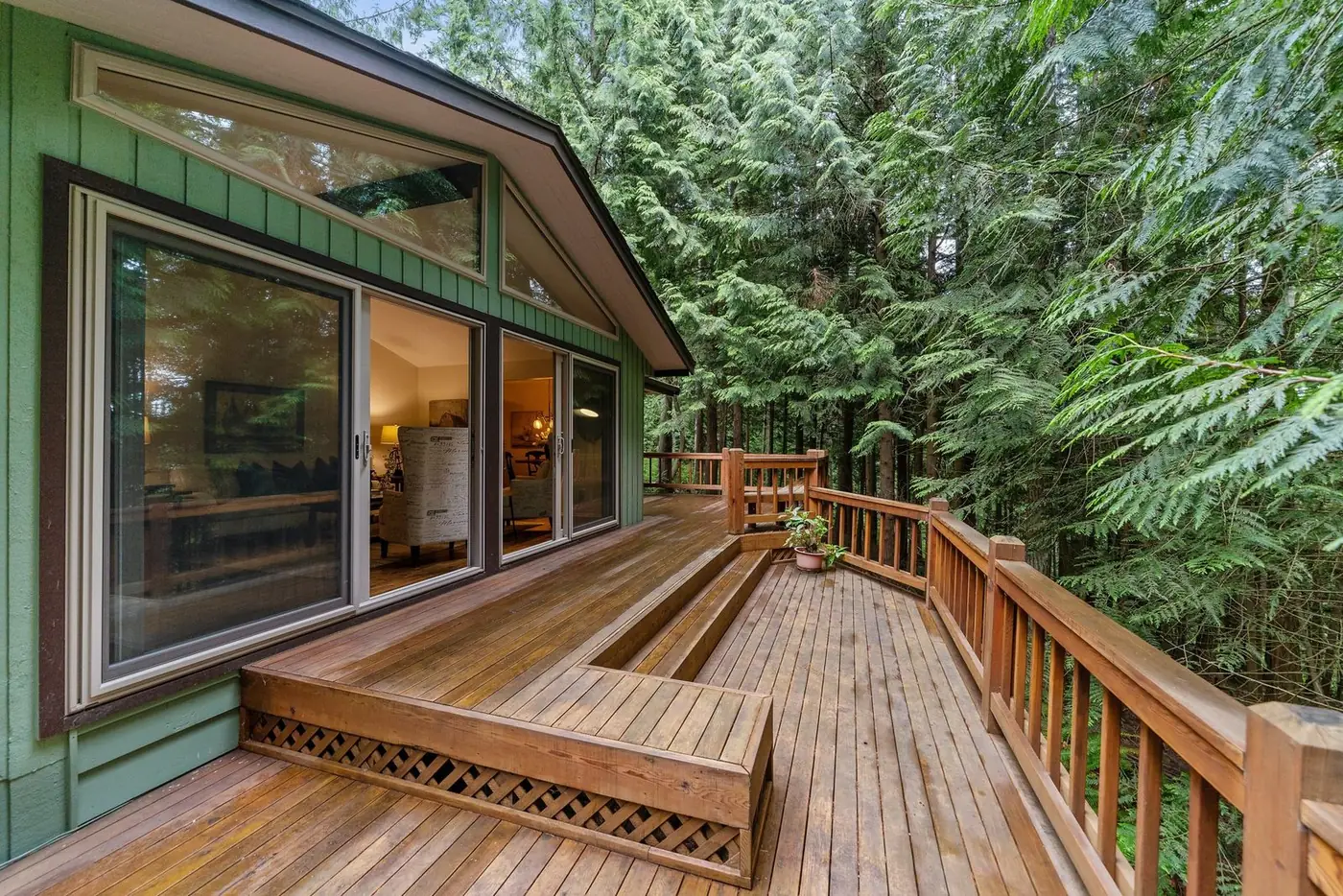
- Rough deck surface lifespans in Georgia: treated pine 10–15+ years, cedar 15–20, composite and PVC 25–30+, ipe 25–40+.
- The frame usually decides when a deck is really done. Rotten ledgers, posts and joists end a deck sooner than worn boards.
- Shade, humidity, packed leaves and pine needles, low clearance over damp clay and skipped staining are what shorten deck life here.
- Soft spots, spongy boards, fungus, rust streaks and wobbly railings are signs of rot to check now, not next season.
- If the frame is sound, resurfacing (new boards and rails) costs far less than full replacement. If the frame is failing, replace.
How long does a deck last, by material
These are rough, experience-based ranges for decks in the North Atlanta climate, not guarantees. A deck in open sun with good airflow and regular care lands at the top of the range; a shaded, neglected one lands at the bottom or below it.
| Decking material | Typical surface life | What usually ends it |
|---|---|---|
| Pressure-treated southern yellow pine | 10–15+ years | Checking, splitting, cupping, rot at board ends and fasteners |
| Cedar | 15–20 years | Wear, soft spots, decay in sapwood and shaded areas |
| Capped composite | 25–30+ years | Fading and wear; often the framing beneath gives out first |
| PVC | 25–30+ years | Surface wear; framing condition |
| Ipe and dense hardwoods | 25–40+ years | Fastener failure, checking if ends weren’t sealed, framing |
Pressure-treated pine
Treated pine resists rot and termites, but the treatment does nothing against sun and water. Left unstained, it greys, checks and splits within a few summers. Kept clean and stained every two to three years, the boards commonly last into their second decade. Our pressure-treated wood deck guide covers how to get the most from it.
Cedar
Cedar heartwood has natural decay resistance and moves less than pine, so it often lasts a bit longer as a deck surface. It’s soft, though, and wears visibly where people walk and chairs slide. The lighter sapwood isn’t decay resistant.
Composite and PVC
Capped composite and PVC boards don’t rot the way wood does, which is why manufacturers back many lines with long warranties, often 25 years or more. Check the current warranty for the specific product line, and note that it covers the boards, not the frame. Older uncapped composites from the early 2000s were prone to mold and swelling; modern capped boards perform much better. See best composite decking and composite vs PVC decking for comparisons.
Ipe and other hardwoods
Dense tropical hardwoods are naturally very resistant to rot and insects and can last decades as a deck surface, provided they’re installed with pre-drilled stainless fasteners or hardwood clips and end-sealed. Read more in our guide to the best wood for decks.
Why the frame matters more than the boards
Almost every deck in Georgia, whatever the walking surface, sits on a pressure-treated pine frame: posts, beams, joists and a ledger board bolted to the house. When people ask how long a deck lasts, the honest answer is usually “as long as the frame.”
That matters most for composite and PVC decks. A board rated for 25 or more years is only as good as the joists it’s screwed to. Framing that’s ground-contact rated, covered with joist tape, well ventilated and attached with a properly flashed ledger can last decades. Framing built with lighter-rated lumber, no tape and an unflashed ledger may start to rot well before the boards wear out. Our guides to deck flashing and joist tape and the deck ledger board explain the details that make the difference.
The parts that fail first
- The ledger. Water getting behind an unflashed ledger rots both the ledger and the house rim joist. This is a common cause of serious deck failures.
- Post bases. Posts set in soil or sitting in water rot from the bottom up.
- Joist tops. Water sits in every screw hole along the top of a joist. Over the years, untaped joists soften from the top down.
- Hardware. Joist hangers and fasteners that aren’t rated for treated lumber corrode and lose strength.
What shortens deck life in Georgia
North Atlanta is hard on wood. We get long, humid summers, heavy rain, mild winters that never fully dry things out, and a lot of tree cover. Each of these works against a deck.
- Humidity and shade. Decks under oaks, poplars and pines stay damp for days after rain. Mildew, algae and rot fungi thrive in exactly those conditions.
- Leaves and pine needles. Debris packed between boards and on top of joists holds water against the wood. Fall cleanup matters more here than in drier places.
- Pollen. The spring pollen coat traps moisture and feeds mildew if it isn’t washed off.
- Low decks over red clay. Clay holds water and a low deck has little airflow underneath, so framing near the ground stays wet.
- Summer sun on the open side. Full sun dries wood quickly, and repeated wetting and drying is what checks and splits unsealed pine.
- Gutters and downspouts. A downspout dumping onto the deck or next to a post is a reliable way to rot a corner early.
Deck boards rotting: signs to look for
Rot is wood decay caused by fungi that need moisture to grow. It often starts where water collects: board ends, around fasteners, where boards cross joists, and at the bottom of posts. Walk your deck once a year, ideally in spring after pollen season, and look for these signs.

On the deck surface
- Soft or spongy boards that give underfoot or let a screwdriver sink in easily.
- Dark staining that stays damp long after rain, especially at board ends.
- Mushrooms or fungal growth in gaps or on the underside.
- Splits that widen around screws or nails, and fasteners that pull out.
- Cupped or sagging boards that hold water.
Underneath the deck
- Ledger stains or soft wood where the deck meets the house.
- Rust on joist hangers, bolts and connectors.
- Posts that are soft at the base, cracked, leaning or not sitting squarely on their footings.
- Joists that are crumbly on top or sagging between beams.
On railings and stairs
- Railing posts that wobble when you push on them. A loose guardrail is a safety issue, not a cosmetic one.
- Stair stringers that are soft where they meet the ground or pad.
If you find soft framing, loose railings or a damaged ledger, stop using that part of the deck and have it looked at. Our deck inspection service checks the structure, connections and railings and tells you what’s worth fixing.
Resurface, repair or replace?
Once a deck shows its age, there are three realistic paths. The right one depends on the frame, not the boards.
Repair
If damage is limited to a few boards, a railing section or some loose hardware, spot repairs make sense. Replacing a handful of rotten boards and re-staining can buy several more years. See deck repair and maintenance.
Resurface
Resurfacing means keeping the existing frame and replacing the decking, railings and often the stairs. It works when the posts, beams, joists and ledger are solid and have plenty of life left. It’s also the most common way to upgrade an old pine deck to composite, though composite often needs joists closer together than older decks were built with, and sometimes joists need to be added or sistered. Learn more on our deck resurfacing page.
Replace
If the ledger is rotten, posts are failing, the footings are undersized, or the deck was never built to code, resurfacing just puts new boards on a bad foundation. Full replacement, with removal of the old deck, new footings, framing and surface, is the safer and often better-value path. A full rebuild typically means demolition (around $5–10 per sq ft) plus new deck pricing, such as $35–55 per sq ft for treated pine or $55–85 for composite in North Atlanta. Those are typical ranges, not quotes. See deck replacement for what’s involved.
Not sure which you need? Work through our repair-or-replace checklist, which walks through the questions we ask on site.
How to make a deck last longer
- Clean it every year. Wash off pollen, mildew and debris, and clear the gaps between boards. Our deck cleaning service handles this if you’d rather not.
- Stain wood on schedule. Every two to three years for pine and cedar, sooner on sunny south- and west-facing decks.
- Manage water. Redirect downspouts, keep soil and mulch away from posts, and make sure the ground under the deck drains.
- Trim back trees and shrubs so air and sun can reach the deck and it dries out after rain.
- Check fasteners and railings each spring and tighten or replace anything loose or rusted.
- Build it right the first time. Ground-contact framing, joist tape, a flashed ledger and corrosion-rated hardware add years to any deck.
Questions about deck lifespan and rot
How long does a pressure-treated deck last?
The boards on a pressure-treated pine deck commonly last 10–15 years in Georgia, longer with regular cleaning and staining. The frame can last considerably longer when it’s ground-contact rated, taped and ventilated, which is why many decks can be resurfaced rather than rebuilt.
How long does a composite deck last?
Modern capped composite boards commonly last 25–30 years or more, and many lines carry long manufacturer warranties; check the current terms for the specific product. The wood frame under them is usually the limiting factor, so protect it with joist tape and ground-contact lumber.
Why are my deck boards rotting?
Rot needs moisture that doesn’t dry out. Common causes are shade, packed leaves and needles between boards, missing stain or sealer, poor airflow under a low deck, downspouts draining onto the deck, and above-ground-rated lumber used where ground-contact lumber was needed.
Can you replace deck boards without replacing the frame?
Yes, if the frame is sound. Resurfacing replaces the decking, railings and often stairs on the existing posts, beams and joists. It only makes sense when the framing and ledger have plenty of life left; otherwise new boards outlast the structure under them.
How do I know if my deck needs to be replaced?
Widespread soft boards, rotten joists or posts, a damaged or unflashed ledger, rusted hardware, wobbly guardrails and undersized footings all point toward replacement. A few bad boards or loose rails usually don’t. When in doubt, get a structural inspection before deciding.
Related pages
Services
Calculators
Guides
Areas we serve
- Deck building in Roswell, Alpharetta, Johns Creek and every North Fulton service area
Stop staring at that tired old deck. Let’s draw something better.
Free in-home consultation. Honest material guidance. A clear, fixed-price quote you can take to the bank — usually within 48 hours of our visit.
Mon–Fri 7a–6p · Sat 8a–4p · Real local crews · No call centers