The Pressure Treated Wood Deck: What Georgia Homeowners Should Know
A pressure treated wood deck is built from lumber, almost always southern yellow pine in Georgia, that has been forced full of a copper-based preservative to resist rot and termites. It’s the most affordable deck you can build, typically $35–55 per square foot installed in North Atlanta, and with the right ratings, fasteners and regular staining it commonly gives 10 to 15 or more years of service on the surface.
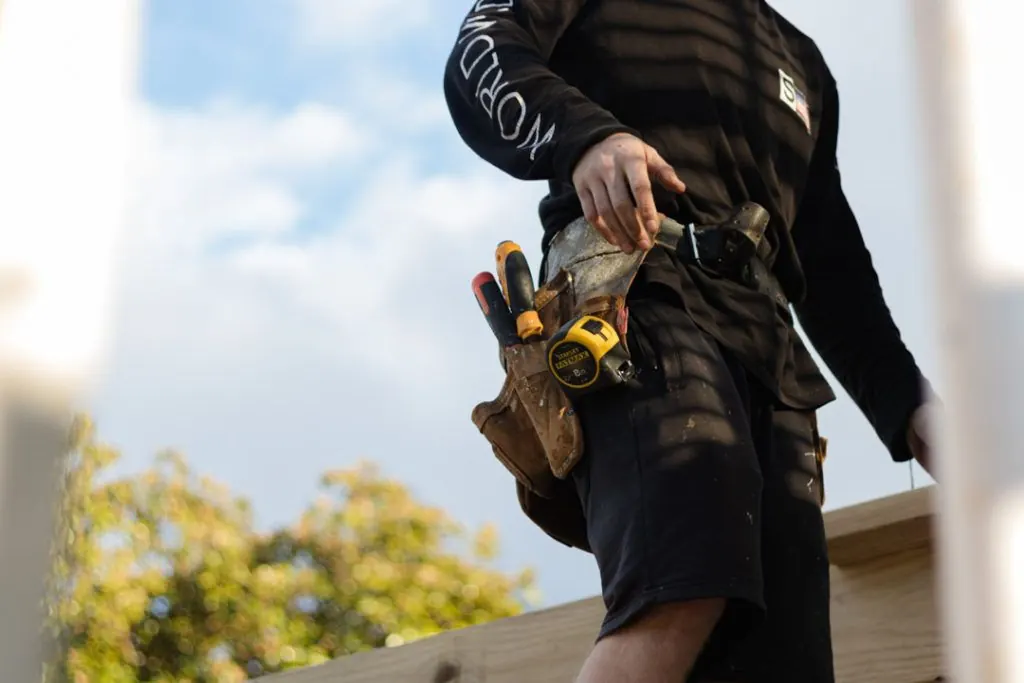
- Pressure-treated southern yellow pine is the standard deck lumber in Georgia: strong, local, and the cheapest way to build a deck.
- Read the end tag. Above-ground lumber (UC3B) suits decking and rails; ground-contact lumber (UC4A, or UC4B for heavy duty) belongs on posts and on framing that’s low, damp or hard to reach.
- Today’s copper-based treatments (ACQ, CA and MCA) corrode plain steel. Use hot-dip galvanized or stainless fasteners and hardware rated for treated lumber.
- Wet treated lumber needs to dry before it will take stain. Use the water-drop test before you finish it.
- Typical North Atlanta installed cost: $35–55 per sq ft. Treated pine framing also sits under almost every composite deck.
What is pressure-treated wood?
Pressure-treated lumber is wood that has been loaded into a large sealed cylinder, flooded with a water-based preservative solution and pressurized so the chemical is driven deep into the wood fibers. The preservative makes the wood toxic to the fungi that cause rot and the insects, including termites, that would otherwise eat it.
Why southern yellow pine?
In the Southeast, the treated lumber at every yard is southern yellow pine, a group of fast-growing pine species native to the region. It’s strong for its weight, holds fasteners well, and its cell structure absorbs preservative more readily than many other species. Because it grows here, it’s also the most economical deck lumber you can buy in Georgia. Elsewhere in the country you may see treated fir or hem-fir, which often needs incising (small slits) to take treatment.
What treatment does and doesn’t do
Treatment protects against decay and insects. It does not protect against sun, water absorption or the swelling and shrinking that come with Georgia’s wet-dry cycles. That’s why an unfinished treated deck still greys, roughens, checks and splits. Treatment keeps the wood from rotting; stain keeps it from weathering.
Ground-contact vs above-ground ratings (UC3B, UC4A, UC4B)
Treated lumber is made to standards from the American Wood Protection Association (AWPA), which sorts uses into “use categories.” The category is printed on the tag stapled to the end of each board, and it tells you how much preservative the wood holds and where it’s meant to go.
| Use category | Meant for | Typical deck use |
|---|---|---|
| UC3B (above ground, exterior) | Exposed wood that dries quickly and is easy to replace | Deck boards, railings, balusters, trim |
| UC4A (ground contact, general) | Wood in or near the ground, or that stays damp or is hard to maintain | Posts, joists, beams and ledgers on most decks |
| UC4B (ground contact, heavy duty) | Critical structural parts, severe exposure or hard-to-replace components | Posts embedded in soil, some structural members |
Which rating should your deck framing be?
The AWPA standard says above-ground lumber shouldn’t be used where wood is close to the ground, has poor airflow, is hard to inspect or replace, or is likely to stay wet from debris or water. Under many North Atlanta decks, with leaves collecting on top of joists and damp clay below, that describes the framing. So we, like many builders, frame with ground-contact lumber throughout rather than mixing ratings. It costs a little more and removes the guesswork.
Posts should always be ground-contact rated, even on a concrete footing, because the base sits close to soil and splash. Your building inspector and the end tag have the final word; if a bin label and a tag disagree, trust the tag. Our best wood for decks guide goes into framing ratings alongside cedar and ipe.
MCA, ACQ and CA: the treatments in today’s lumber
Older decks were usually built with CCA (chromated copper arsenate). The industry voluntarily stopped using CCA for most residential lumber at the end of 2003, and the treatments that replaced it rely on copper plus a co-biocide.
- ACQ (alkaline copper quaternary): one of the first CCA replacements. Effective, but noticeably corrosive to steel fasteners.
- CA (copper azole): copper with an azole fungicide, sold in several formulations. Also corrosive to unprotected steel.
- MCA (micronized copper azole): copper ground into tiny particles and suspended rather than dissolved. It’s now very common at big-box stores and gives the lighter, less green color many people notice. Manufacturers generally describe it as less corrosive than ACQ, but it still calls for corrosion-resistant fasteners.
You won’t usually get to choose the chemical; you buy what your supplier stocks. What matters is matching fasteners to it and reading the tag for the use category.
Is treated wood safe around kids and gardens?
Modern copper-based treatments don’t contain arsenic and are widely used for decks, play structures and raised beds. Common-sense precautions still apply: wear a dust mask and gloves when cutting, sweep up sawdust, wash your hands, and never burn treated scraps. Dispose of offcuts with regular construction waste as your local rules allow.
Fasteners and hardware for treated lumber
The copper in treated wood reacts with plain steel and electro-galvanized fasteners, and in damp conditions that corrosion can weaken screws, nails, bolts and joist hangers over time. In a humid climate like ours, this is not a detail to skip.
- Hot-dip galvanized fasteners and connectors, made to a heavy-coating standard and labeled for use with treated lumber, are the baseline.
- Stainless steel (type 304, or 316 for harsher exposure) is the top choice, especially for hidden fastener systems, near pools or where the deck stays wet.
- Coated deck screws are fine when the packaging states they’re approved for the treatment and exposure.
- Hangers and post bases should be the hot-dip or stainless versions from the connector maker, and fastened with matching nails or screws. Don’t mix stainless screws with galvanized hangers.
Rusted hangers and bolts are one of the main things we find on older decks during a deck inspection.
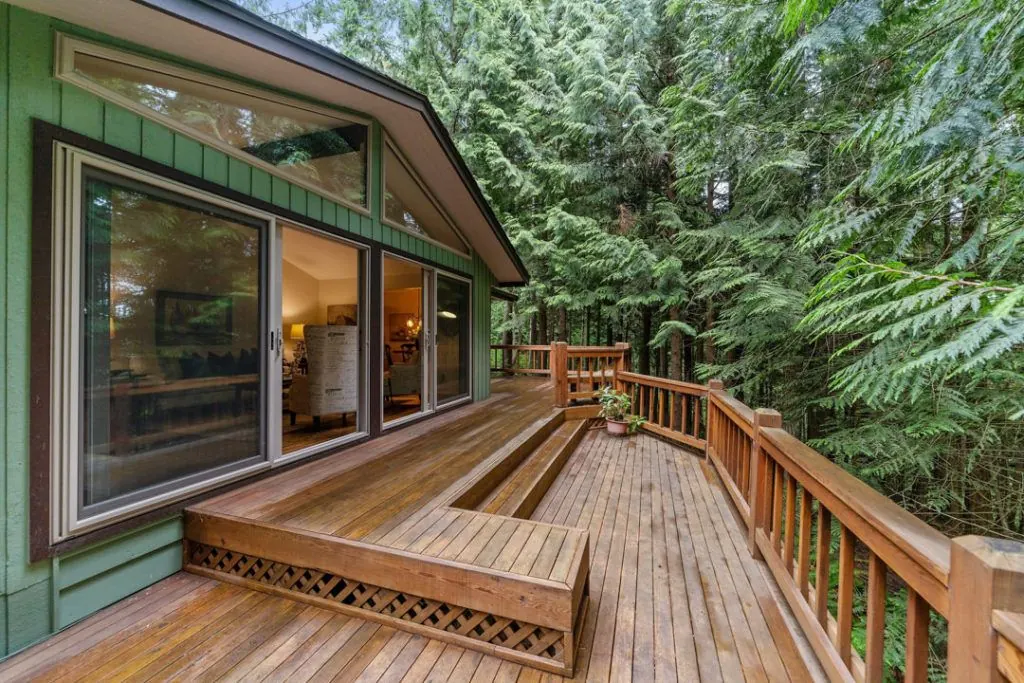
Drying, cupping and checking
Most treated pine is sold soon after treatment, still heavy with water. As it dries over the following weeks and months, it shrinks, mostly across its width. That drying is behind most of the quirks people notice in a new treated deck.
Shrinking and board gaps
Because wet boards shrink, they’re usually installed tight or nearly so, and the gaps open up as they dry. Kiln-dried after treatment (KDAT) lumber is the exception: it’s already dry, so it gets a normal gap at install. Our deck board spacing guide covers both.
Checking
Checks are the small cracks that open along the grain as the surface dries faster than the core. They’re normal in treated pine, especially in full sun, and usually cosmetic. Keeping the wood sealed reduces how deep and how wide they get.
Cupping, twisting and crowning
Boards can cup (edges curl up or down), twist or bow as they dry unevenly. Choosing straight boards, fastening with two screws at every joist, keeping joist spacing tight enough for the board thickness, and leaving good airflow under the deck all help. Premium or select grades of decking tend to move less. Very wide boards cup more than narrow ones, which is one reason 5/4x6 and 2x6 are the usual decking sizes.
When to stain a pressure treated wood deck
Stain needs somewhere to go. Wet treated lumber is already full of water, so stain applied too soon sits on the surface, dries blotchy and peels. The wait varies with weather, sun and the lumber itself, from a few weeks in a hot, dry spell to a few months in shade or a wet season.
The water-drop test
Sprinkle some water on the boards. If it beads up and sits there, the wood isn’t ready. If it soaks in within a few minutes, it’s dry enough to clean and stain. Test a few spots, including shaded ones.
What to use
A penetrating, semi-transparent or semi-solid stain made for decks is the usual choice on treated pine. It soaks in, shows the grain, and fades rather than peeling, so re-coating every two to three years is straightforward. Solid stains and paint hide more but can peel on horizontal surfaces. Compare the options in our guides to the best deck stain, deck stain vs paint and deck stain colors, and estimate how much you’ll need with the deck stain calculator.
In North Atlanta, avoid staining in direct midday summer sun, which flashes the stain dry before it soaks in, and wash off spring pollen first. Professional staining typically runs $2–5 per sq ft; see deck staining and sealing.
Pressure-treated deck cost
A pressure-treated pine deck typically costs $35–55 per square foot installed in North Atlanta in 2026. That’s a typical range, not a quote, and it covers footings, framing and decking. Height, shape, railings and stairs move the number.
| Item | Typical North Atlanta range |
|---|---|
| Treated pine deck, installed | $35–55 / sq ft |
| Wood railing | $35–60 / linear ft |
| Wood stairs | $250–450 / step |
| Removing an old deck | $5–10 / sq ft |
| Permit and plans | $250–800 |
| Professional staining | $2–5 / sq ft |
For comparison, cedar typically runs $45–65 per sq ft and capped composite $55–85. To total your own project, try the deck cost calculator, and for a lumber and fastener list, the deck material calculator.
How long does a pressure-treated deck last?
Treated pine deck boards commonly last 10–15 years in Georgia, and longer with regular cleaning and staining. Ground-contact framing with joist tape, a flashed ledger and good airflow can last considerably longer than the boards. Shade, packed leaves, low clearance over damp clay and skipped maintenance all shorten the life. For a deeper look, read how long a deck lasts.
Pressure-treated framing under composite decks
Even if you never walk on treated pine, you probably will stand on it. Almost every composite and PVC deck in Georgia is framed with pressure-treated lumber, because that’s what the structure needs: strength, rot resistance and a reasonable price. Some builders use steel or aluminum framing, but it’s a niche option here.
Building a frame that lasts as long as the boards
- Ground-contact lumber throughout. Composite boards can last 25 years or more; the frame should too.
- Joist tape. A butyl or similar tape on top of joists and beams keeps water out of screw holes. Composite boards dry slowly on their underside, so this matters even more. See deck flashing and joist tape.
- Joist spacing. Many composite boards call for joists at 16 inches on center, and closer for diagonal layouts. Check the manufacturer’s installation guide and our deck joist spacing guide.
- Straight, flat framing. Composite shows every high and low joist. Crowns should go up, and badly bowed lumber should be culled.
- Ventilation. Leave airflow under low decks so the frame dries out.
Whether you choose treated pine boards or composite on a treated frame, our custom decks page explains how we plan materials, ratings and details for your yard.
Questions about pressure-treated wood decks
How long should pressure-treated wood dry before staining?
Anywhere from a few weeks to a few months, depending on sun, weather and the lumber. Rather than counting days, sprinkle water on the boards: if it beads, wait; if it soaks in within a few minutes, clean and stain. Kiln-dried after treatment lumber can be finished much sooner.
What is the difference between ground contact and above ground treated wood?
Ground-contact lumber (UC4A or UC4B) holds more preservative and is meant for wood in or near soil, or that stays damp or is hard to replace. Above-ground lumber (UC3B) holds less and suits exposed parts that dry quickly, like deck boards and railings. The use category is printed on the end tag.
What screws should I use with pressure-treated wood?
Use hot-dip galvanized or stainless steel fasteners, or coated deck screws labeled as approved for treated lumber. Joist hangers and connectors should be the matching hot-dip galvanized or stainless versions. Plain steel and light electro-galvanized fasteners corrode in contact with copper-based treatments.
Is a pressure-treated deck cheaper than composite?
Yes, up front. A treated pine deck typically runs $35–55 per sq ft installed in North Atlanta, versus $55–85 for capped composite. Over time, the gap narrows because wood needs cleaning and staining every two to three years and new boards sooner, while composite mainly needs washing.
Why is my new pressure-treated deck cracking?
Small cracks along the grain, called checks, are normal as wet treated lumber dries, especially in strong sun. They’re usually cosmetic. Staining once the wood is dry and keeping it sealed reduces checking. Deep splits at fasteners or soft wood are different and worth a closer look.
Related pages
Services
Calculators
Guides
Areas we serve
- Deck building in Roswell, Alpharetta, Johns Creek and every North Fulton service area
Stop staring at that tired old deck. Let’s draw something better.
Free in-home consultation. Honest material guidance. A clear, fixed-price quote you can take to the bank — usually within 48 hours of our visit.
Mon–Fri 7a–6p · Sat 8a–4p · Real local crews · No call centers